Fidelio
Facts
Opera Film, 115 min, 2018Directed by Jan Schmidt-Garre
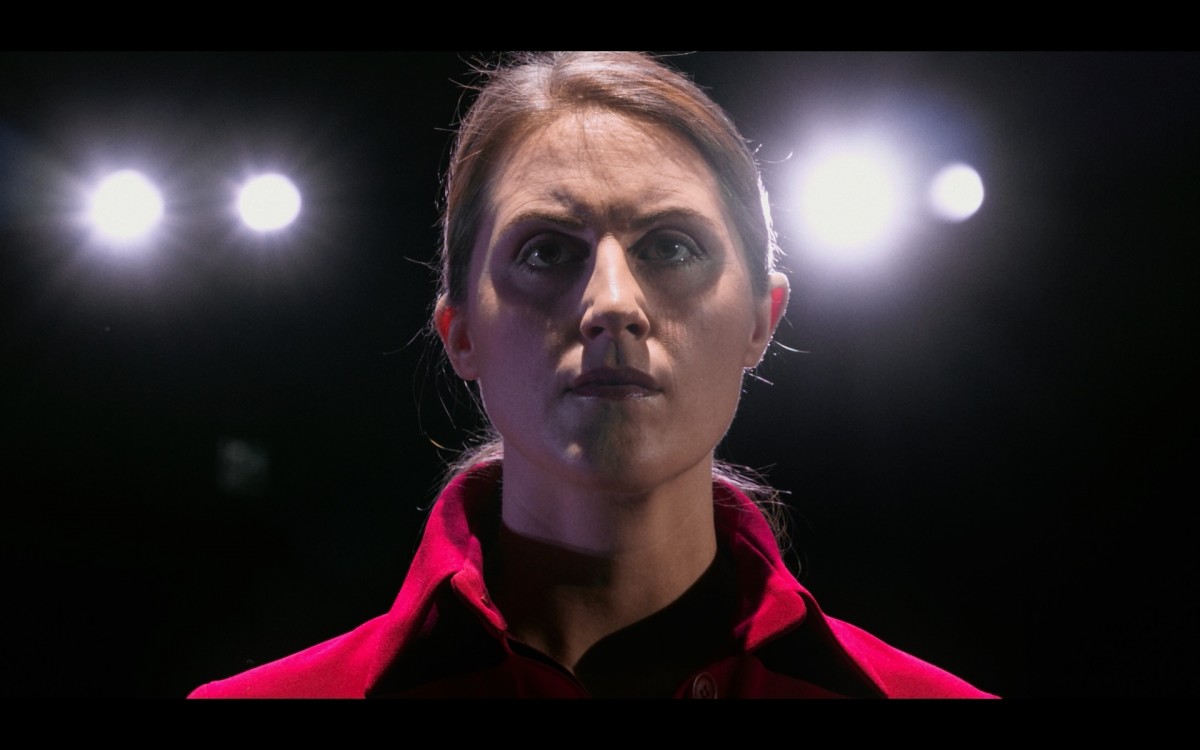
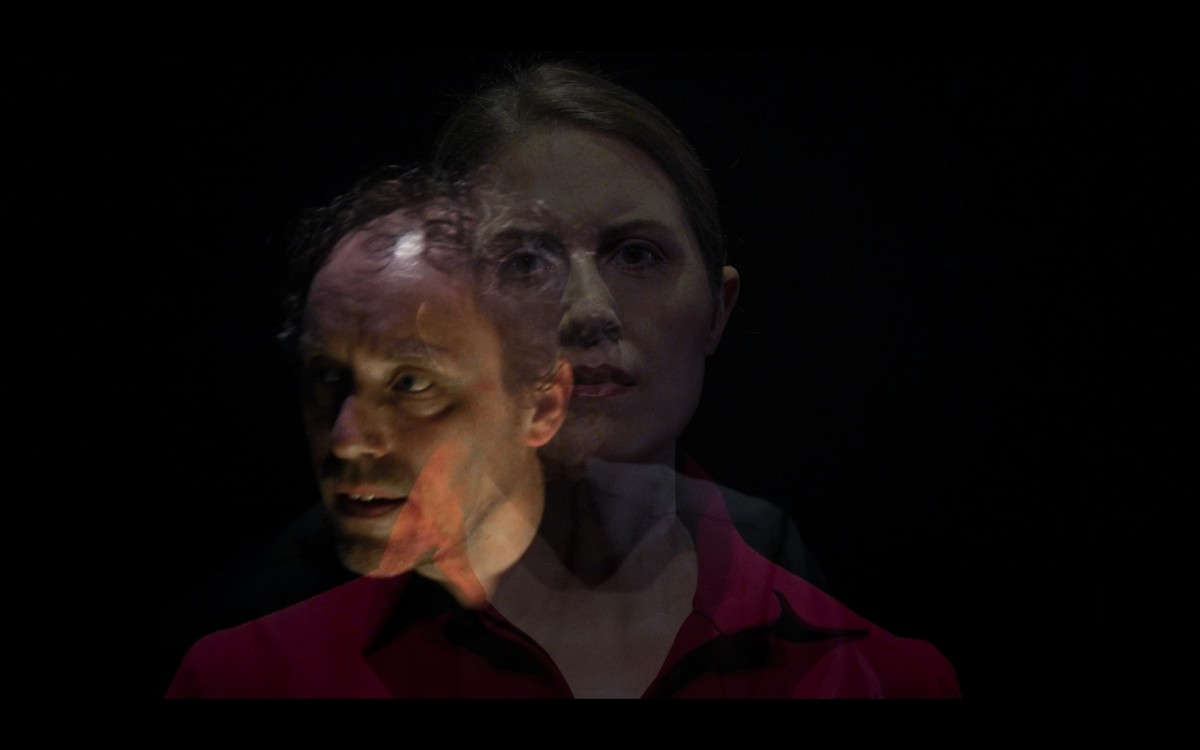
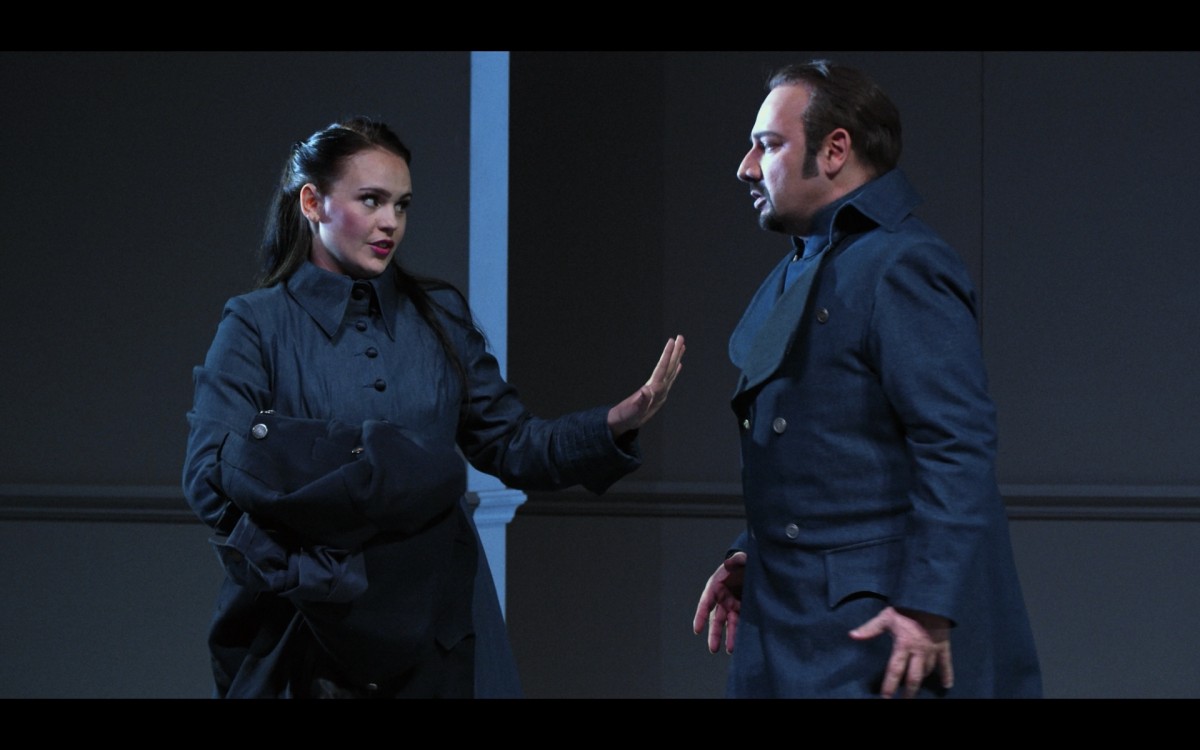
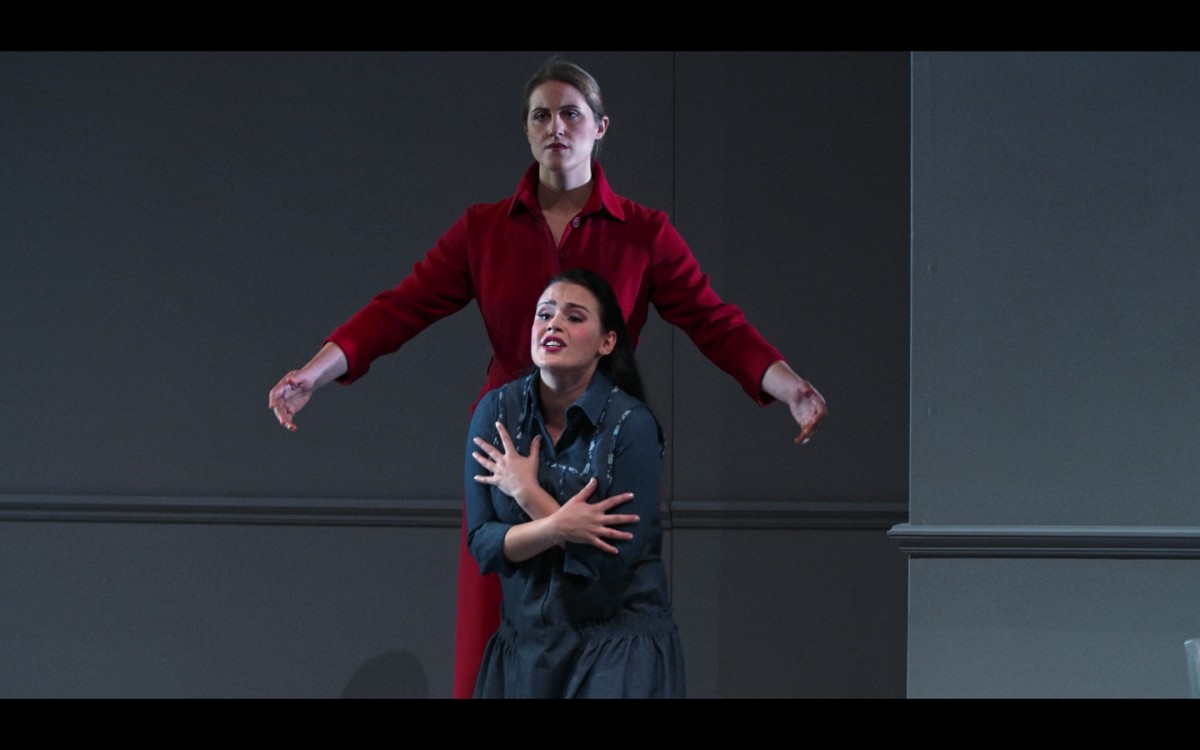
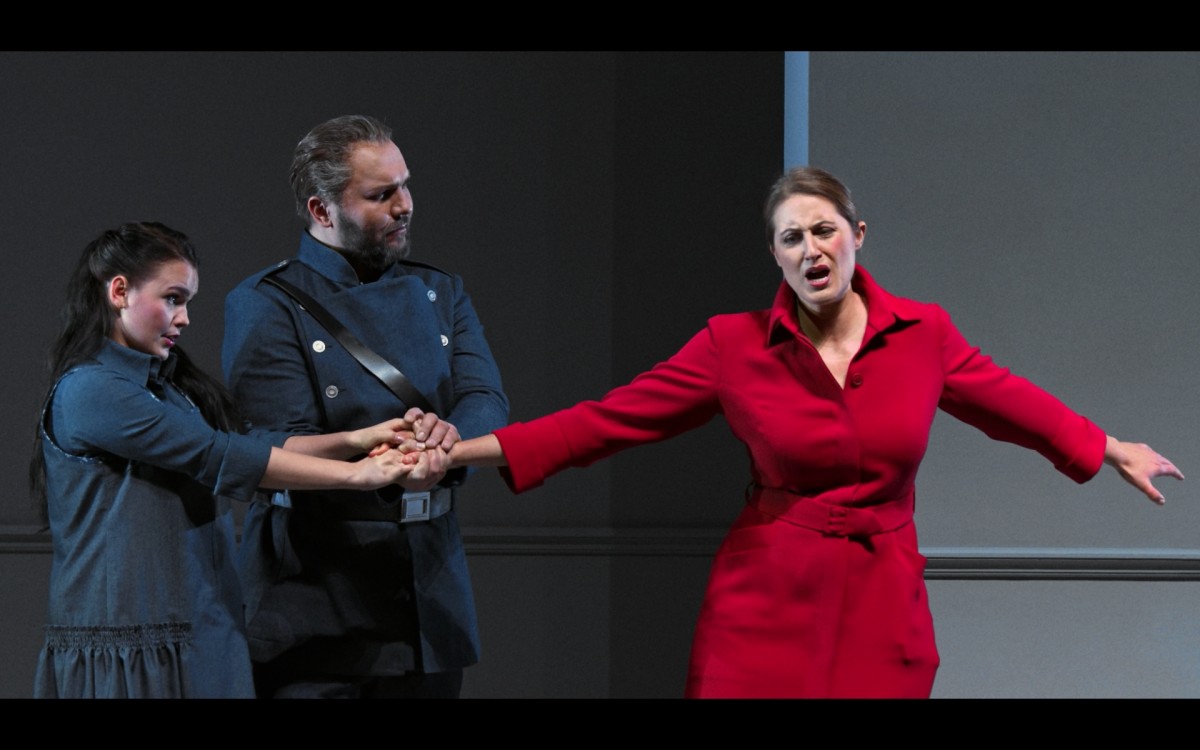
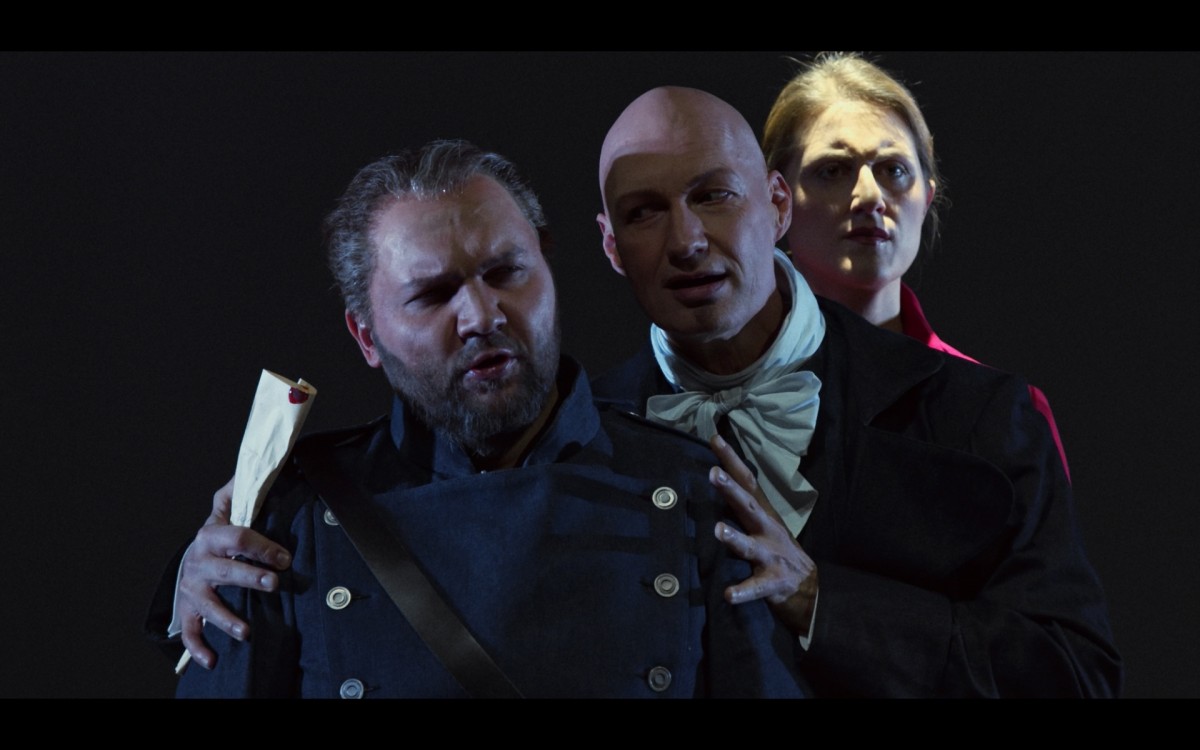
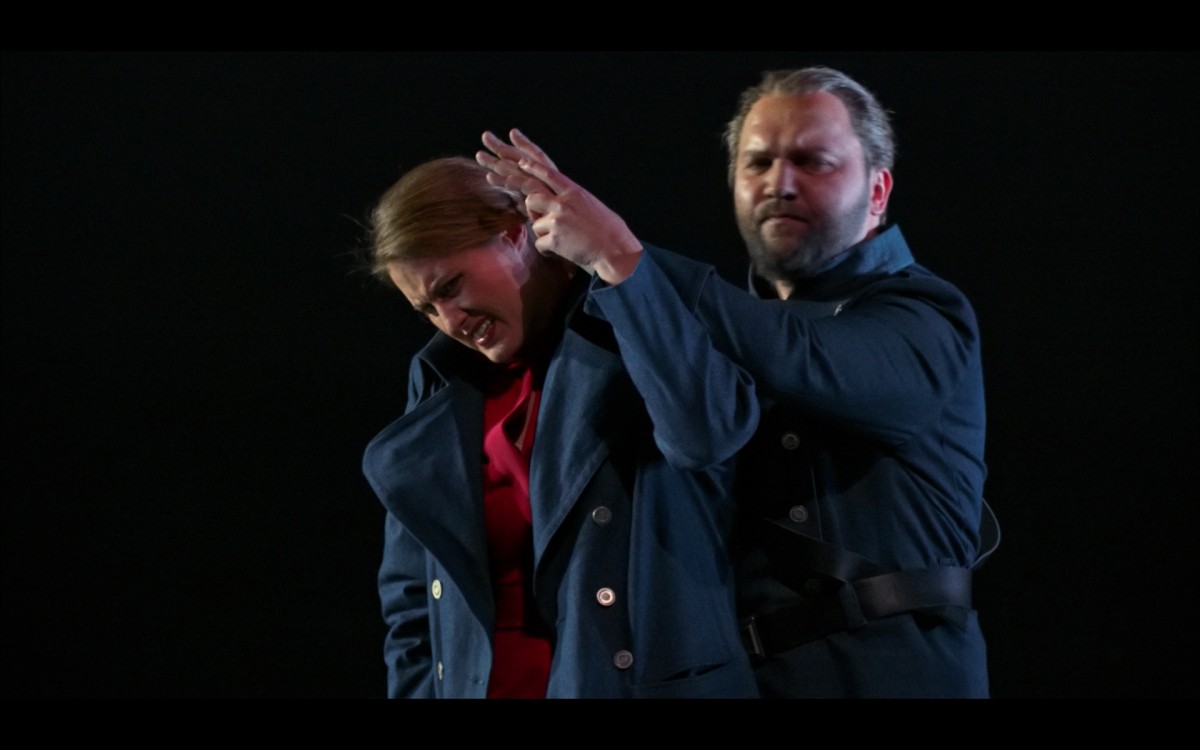
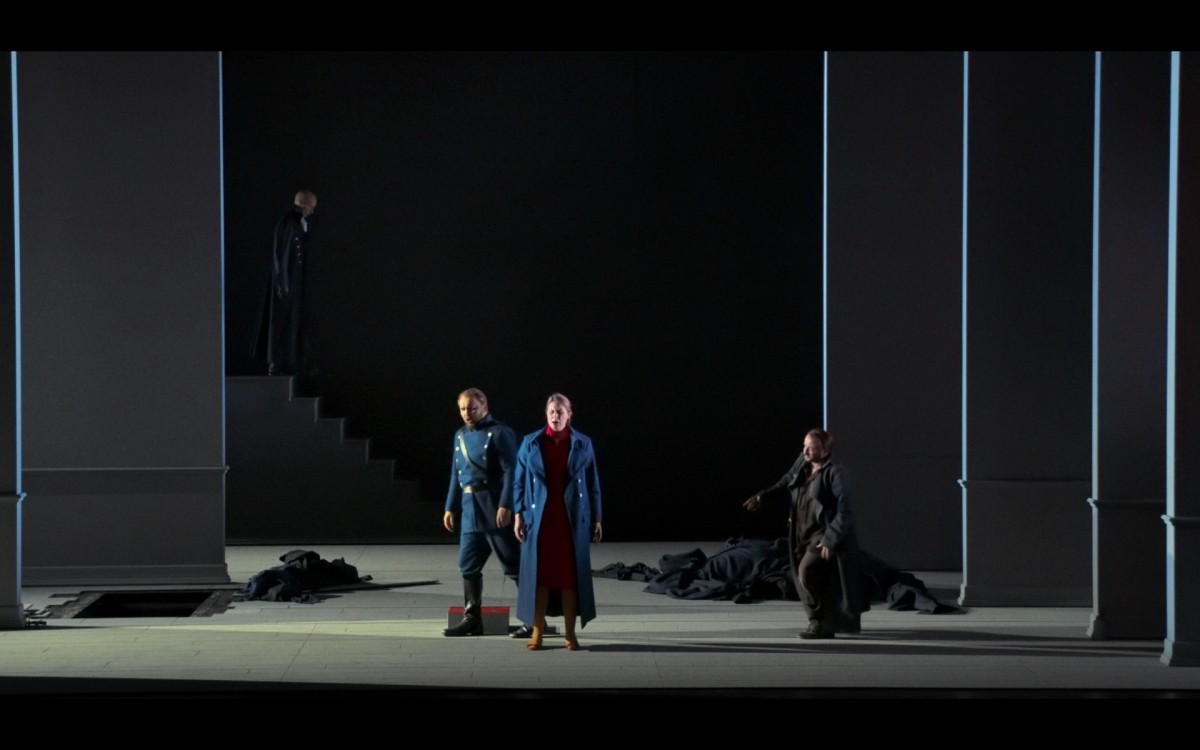
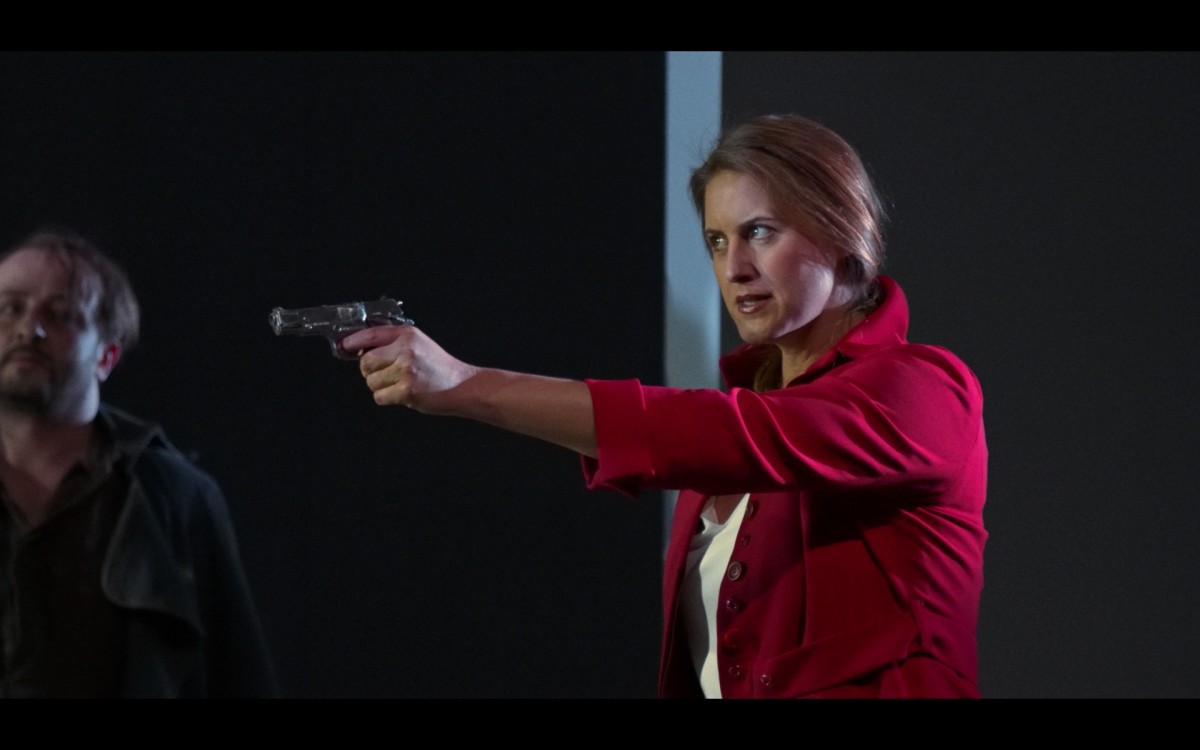
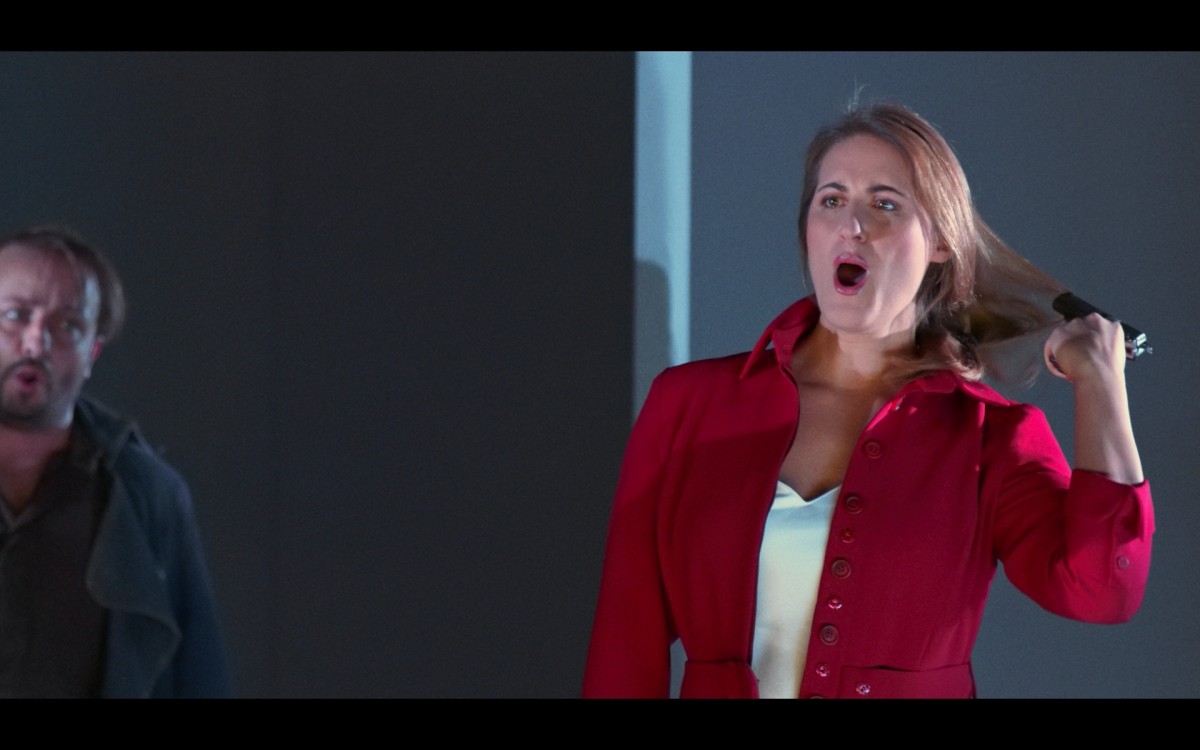
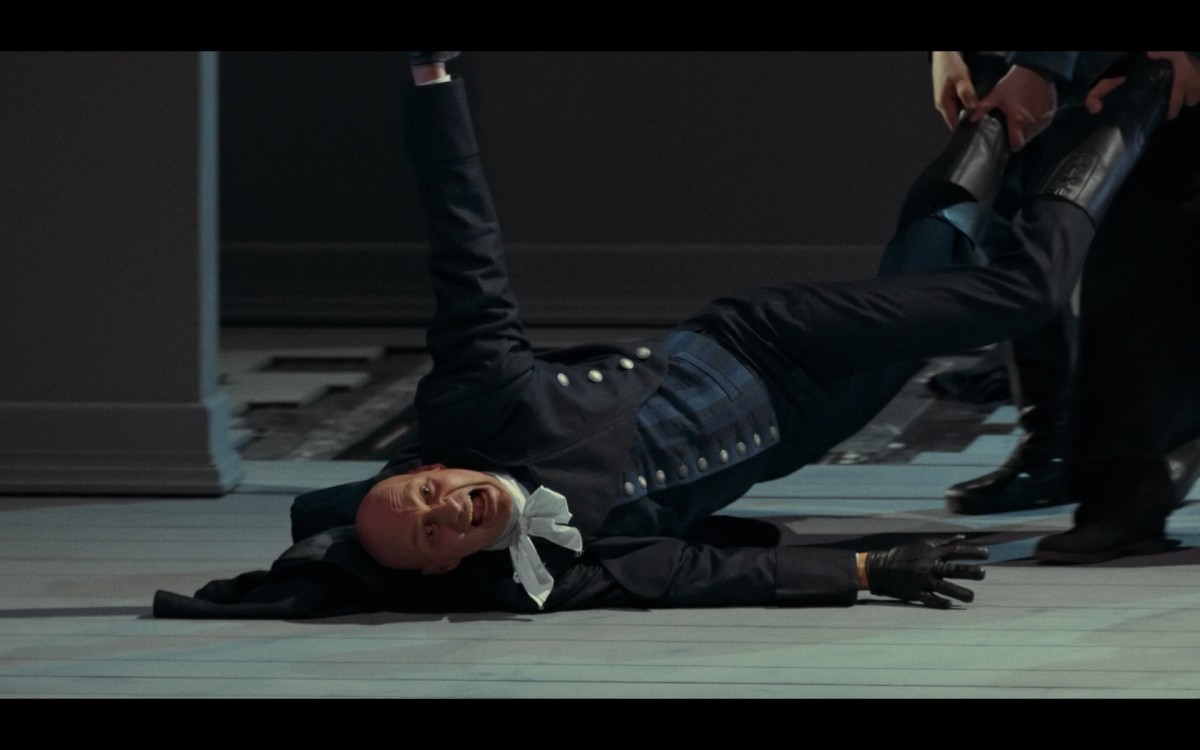
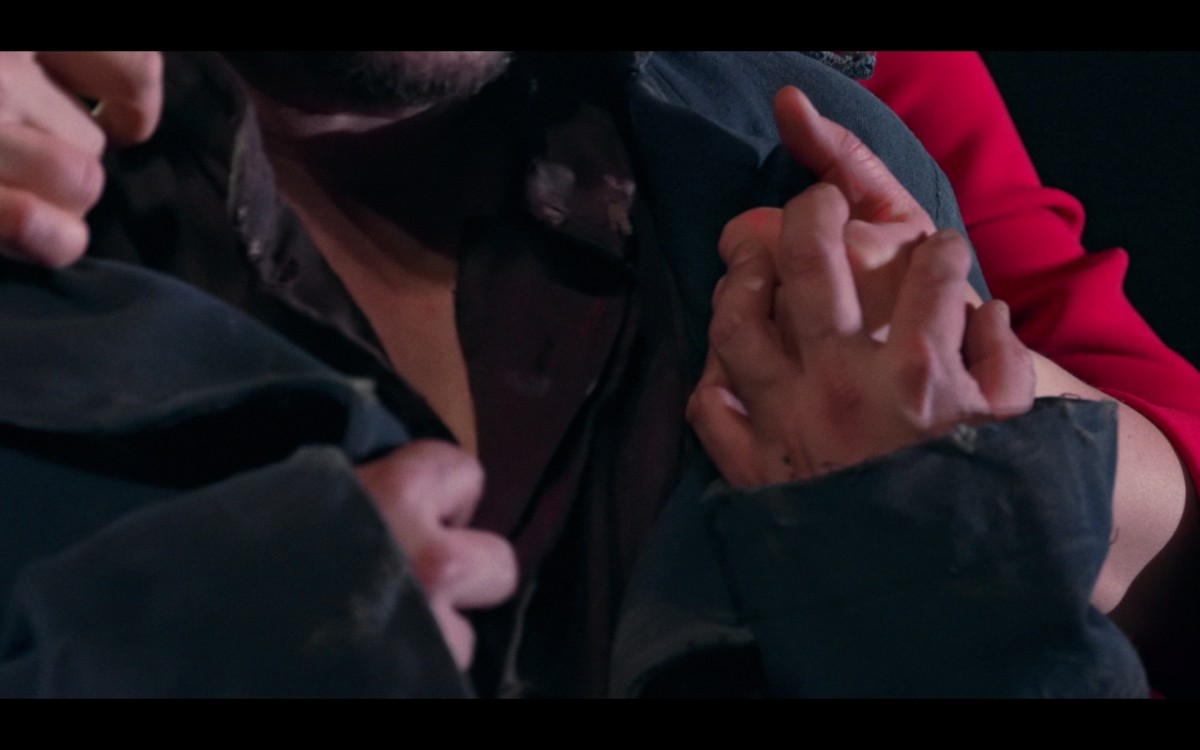
This film is based on Jan Schmidt-Garre’s acclaimed stage production of Beethoven’s "Fidelio". The producers carefully filmed and edited several performances. By using additional footage of Jacquelyn Wagner as Leonore the stage production is transformed into a cinematic experience.
Leonore: Jacquelyn Wagner
Florestan: Norbert Ernst
Don Pizarro: Roman Trekel
Rocco: Wojtek Gierlach
Marzelline: Tatjana Schneider
Jaquino: Riccardo Botta
Set designer: Nikolaus Webern
Costume designer: Yan Tax
Lighting designer: Reinhard Traub
Grading: Alastair Owen
Opernchor St. Gallen
Conducted by Michael Vogel
Sinfonieorchester St. Gallen
Conducted by Otto Tausk
Theater St. Gallen
Directed and edited by Jan Schmidt-Garre
A co-production with EuroArts, 2018
Photos





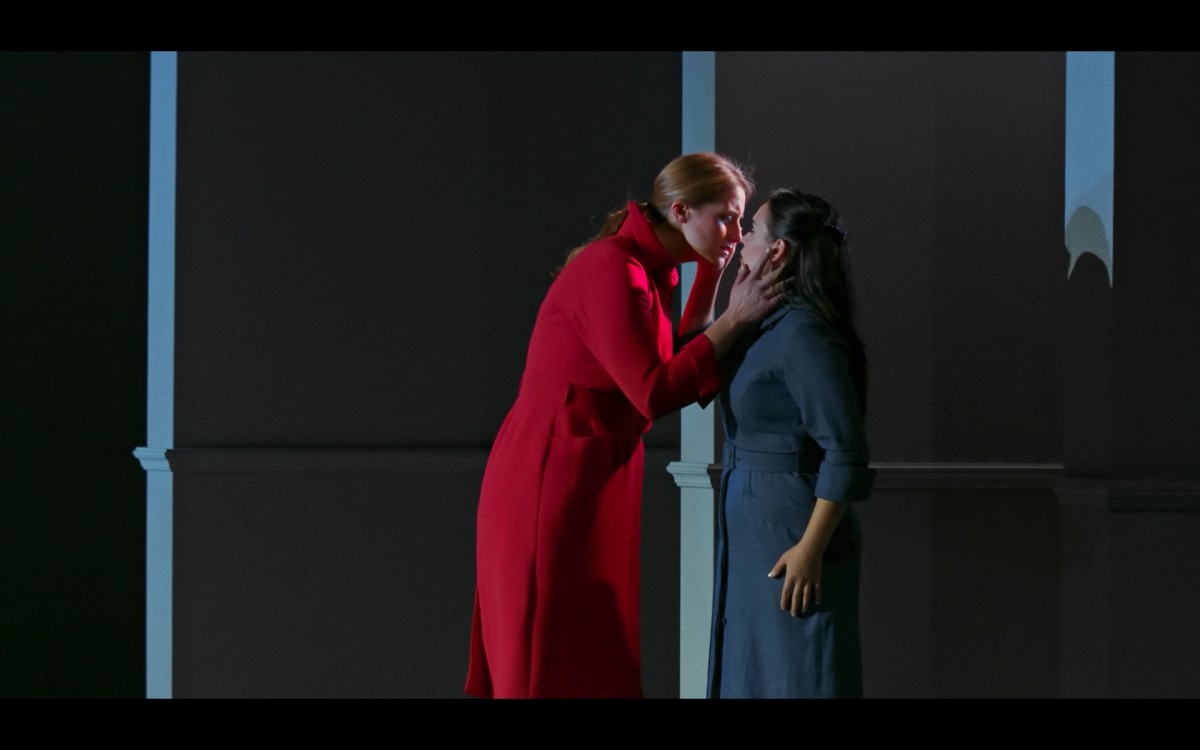
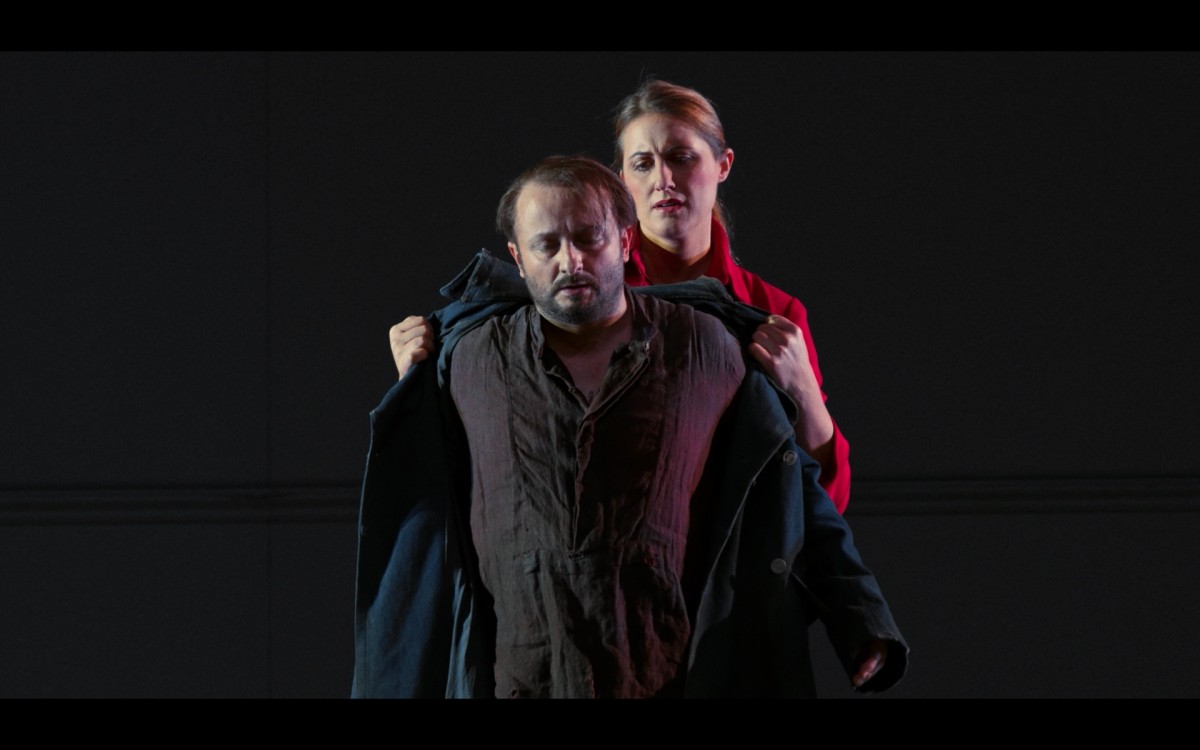
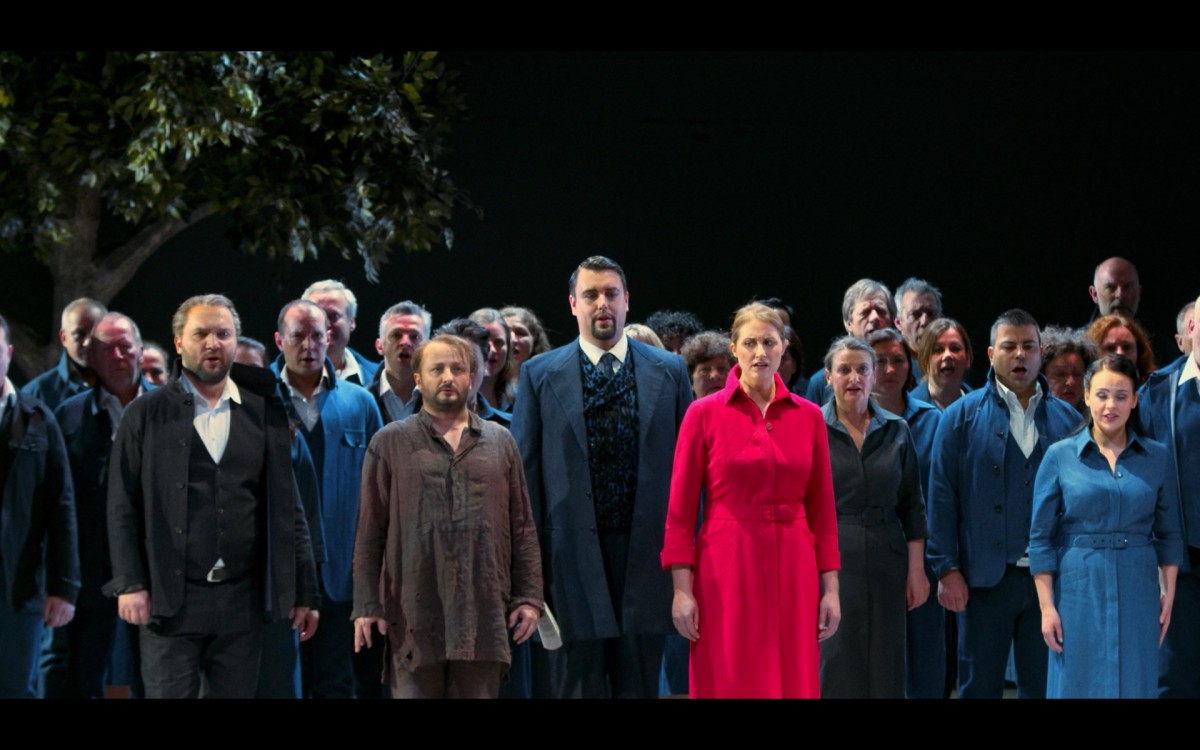
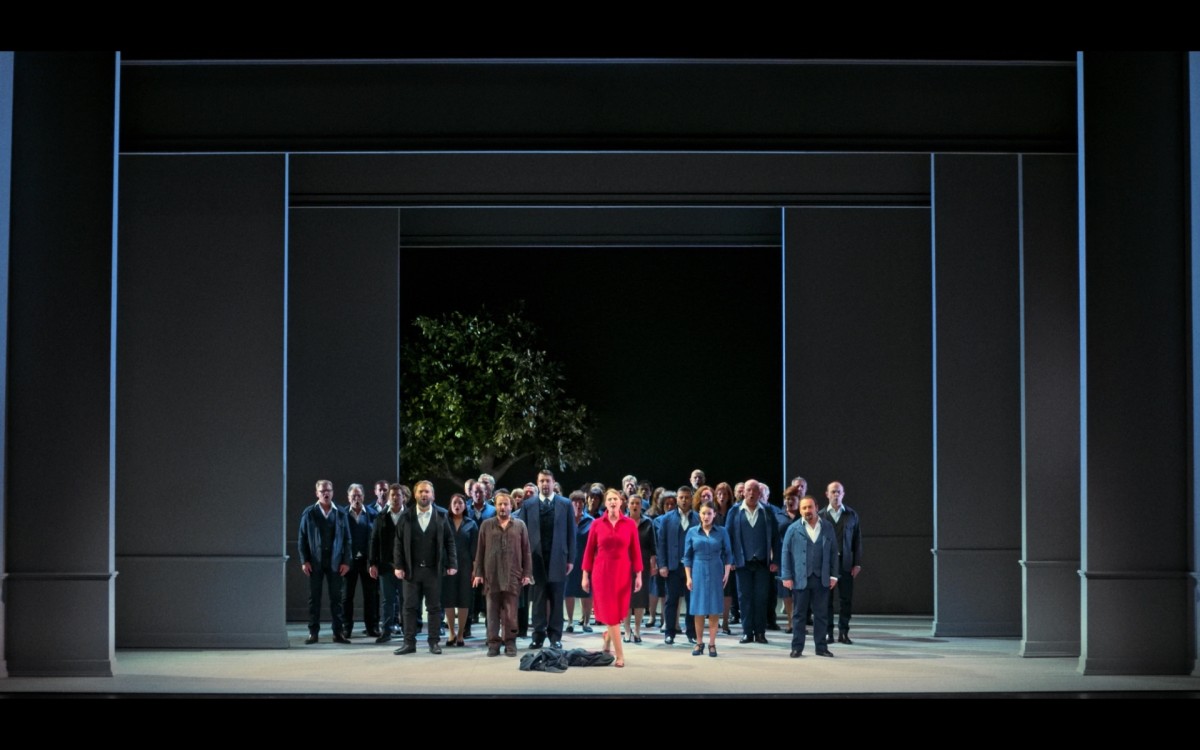

Press
Christoph Schlüren, Neue Musikzeitung
Jan Schmidt-Garre’s staging never tries to impose anything on the music and the drama, and it never indulges in digressions. It is elaborated with ritual rigor and at the same time of a continuous dynamic, which corresponds to that of the plot in a clarifying and fine-drawing way. Greatest simplicity arises from inexhaustible variety, and thus in maximum harmony with Beethoven’s very own quality as a composer. It is an opera direction that follows the great classical theater, without exaggerated gestures, without sensationalist mannerisms, without sought-after originality, and implemented with a radicality of vision that makes us wish to have this director put his clearly oriented wealth of ideas into practice in many places. What he does is – from today’s point of view – revolutionary: it is a staging that moves in harmony with the music, anticipating its turns as well as occasionally counterpointing them, and this always from the immediate reference to the harmonic, motivic, dramatic events.
Peter Hagmann, Mittwochs um zwölf
One is completely moved when Jacquelyn Wagner, an American who is confident in German without an accent, begins to sing. Effortlessly and with rich overtones she takes the heights of her part; but when she descends into the chest register, her anchoring in a brilliant depth is revealed. ... Wisely conceived and brilliantly executed staging.
Ingobert Waltenberger, Online Merker
Profound, geometrically choreographed » Fidelio «, a chamber piece of emotions, of utopias far from any narrative realism. A great, moving opera film in a first-class musical realization is to be marveled at.
Manuel Brug, Fono-Forum, März 2019
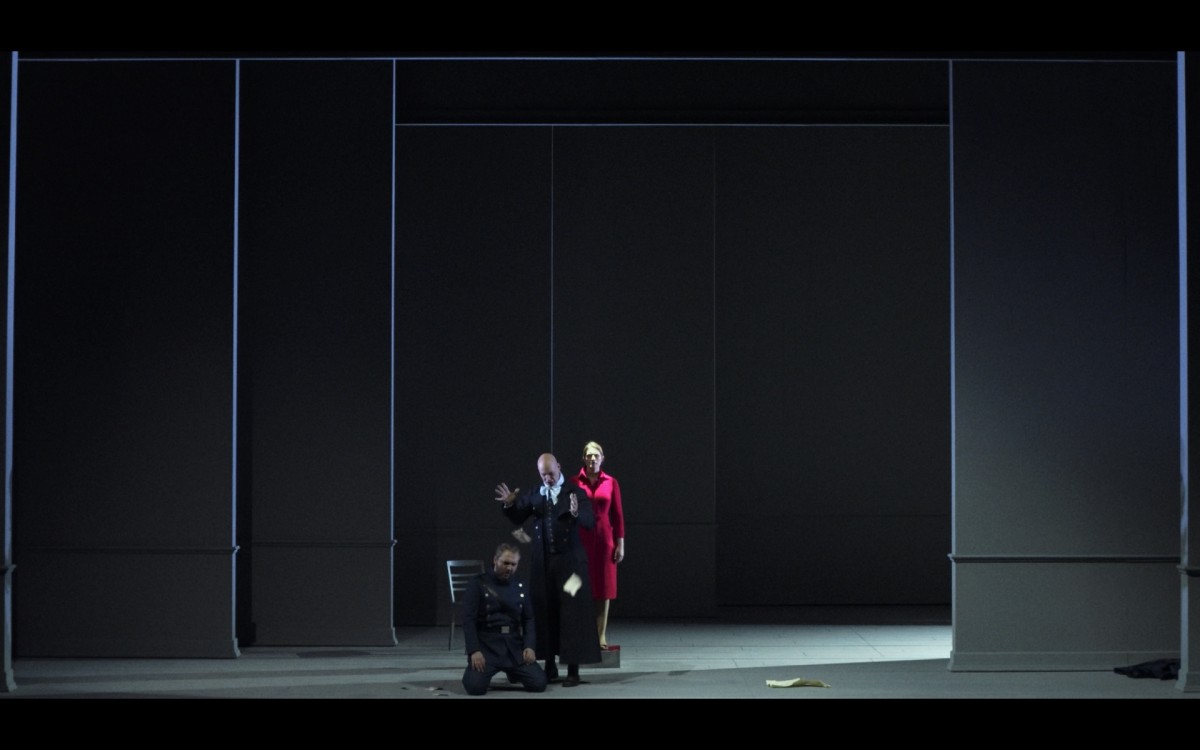
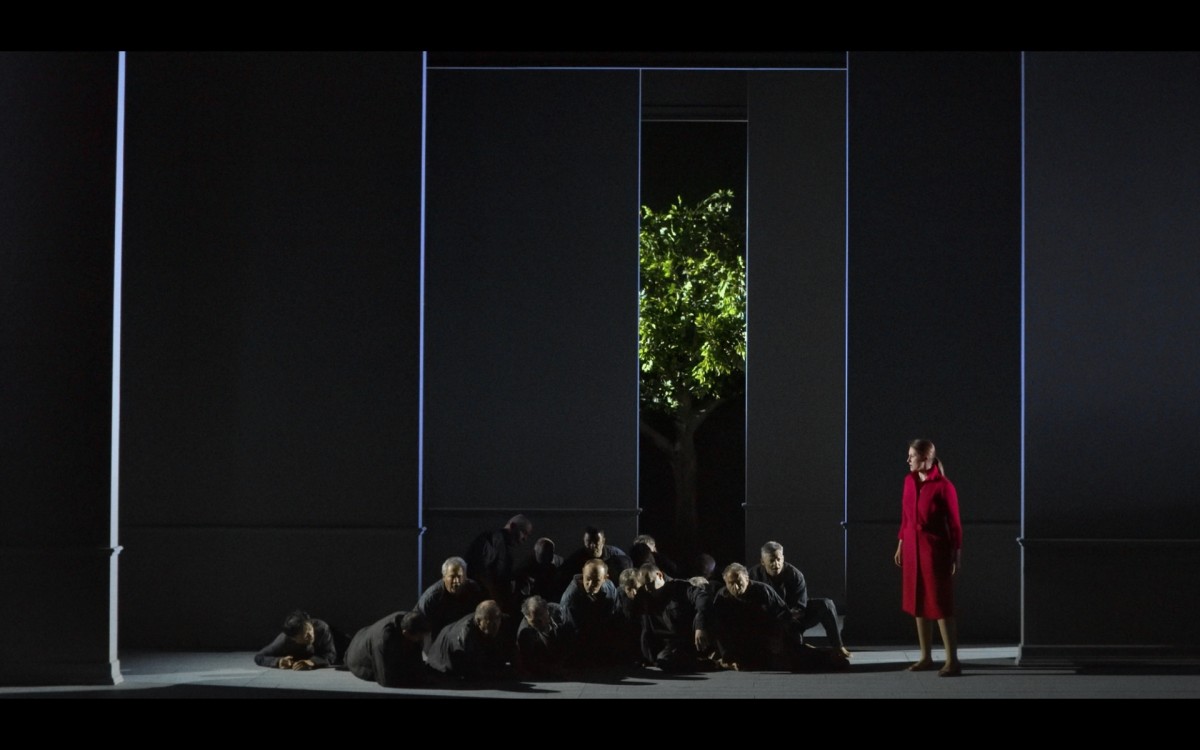
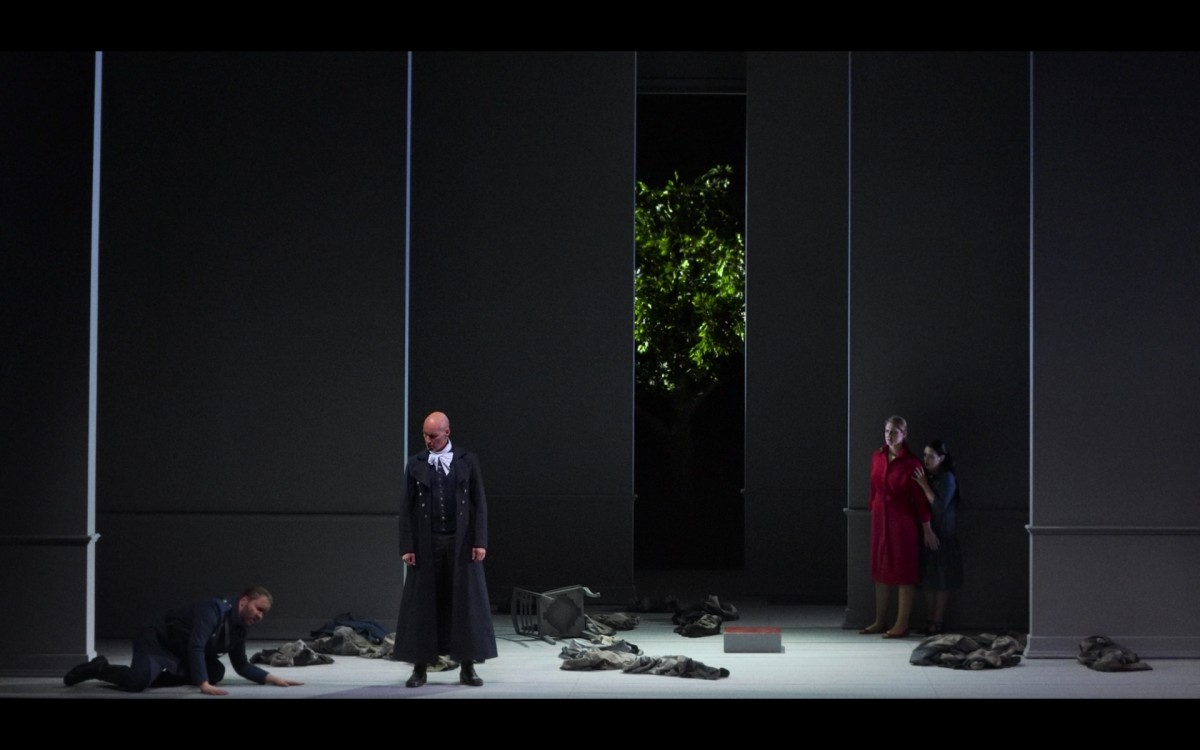
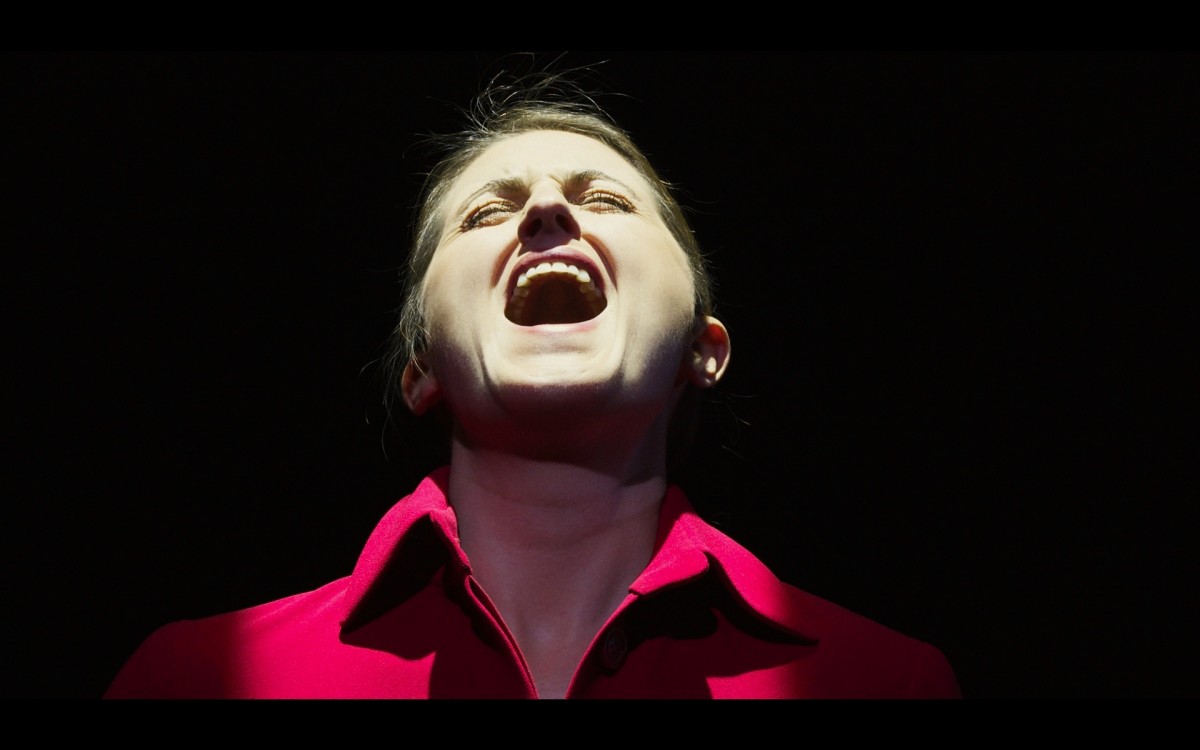
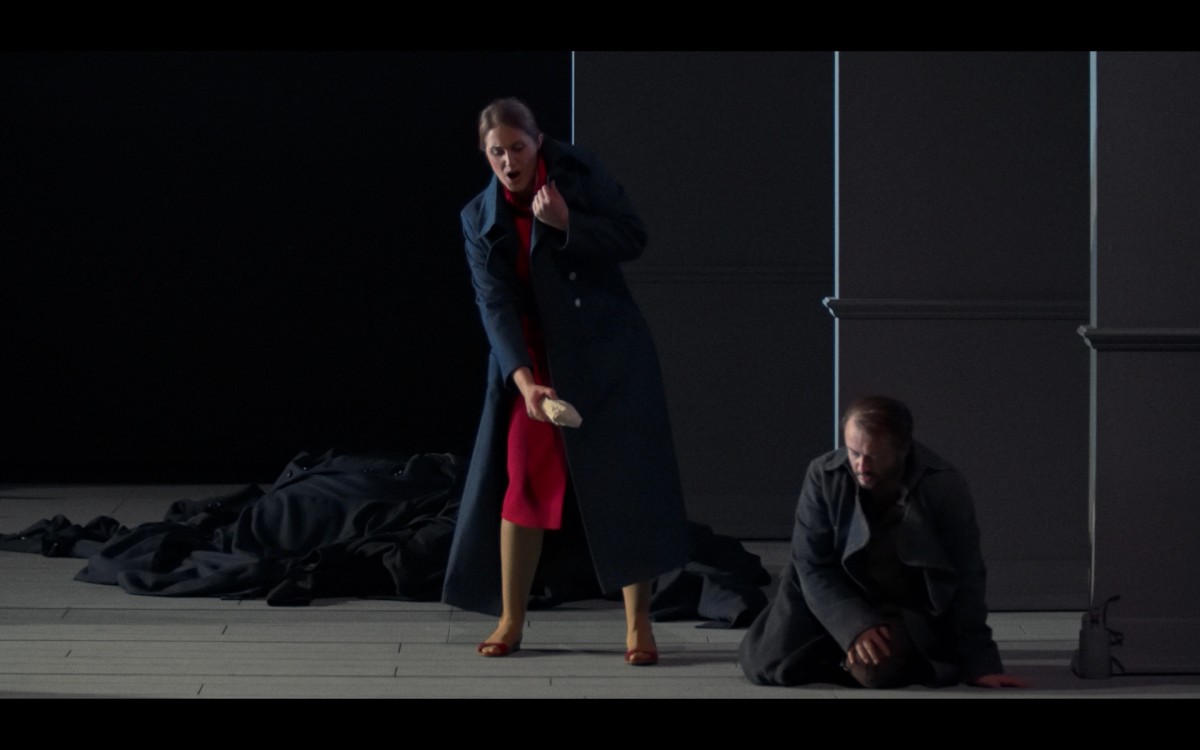
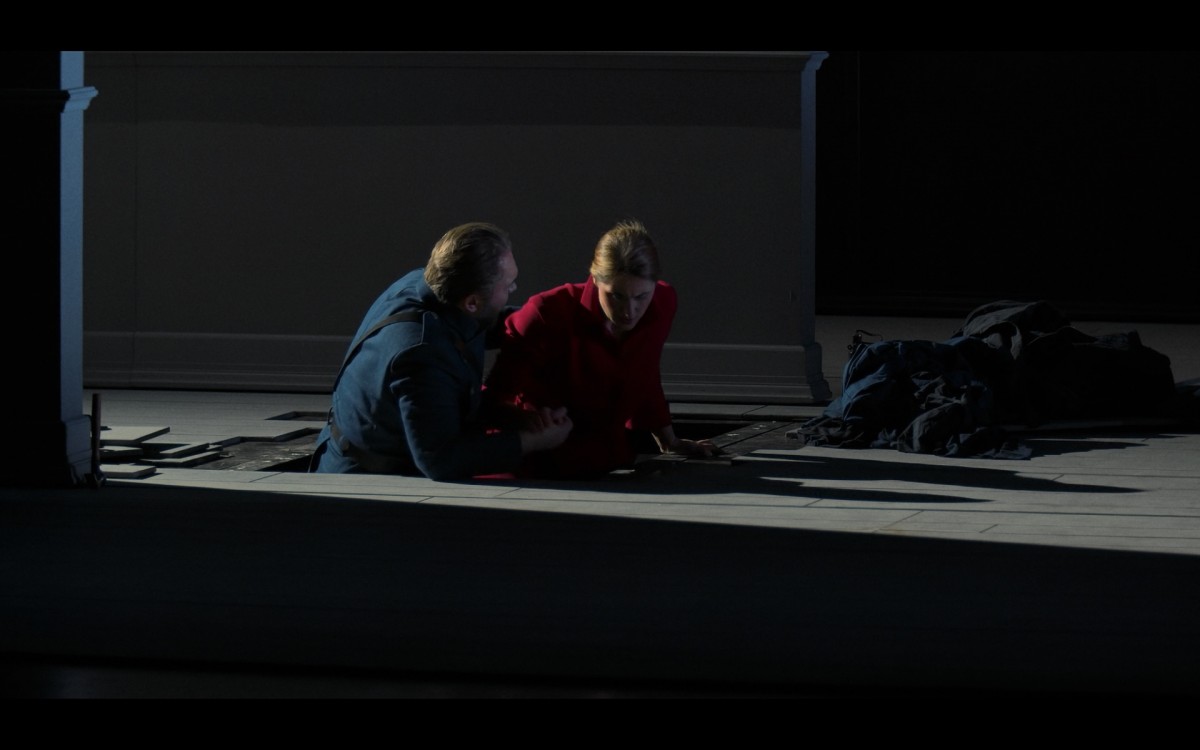
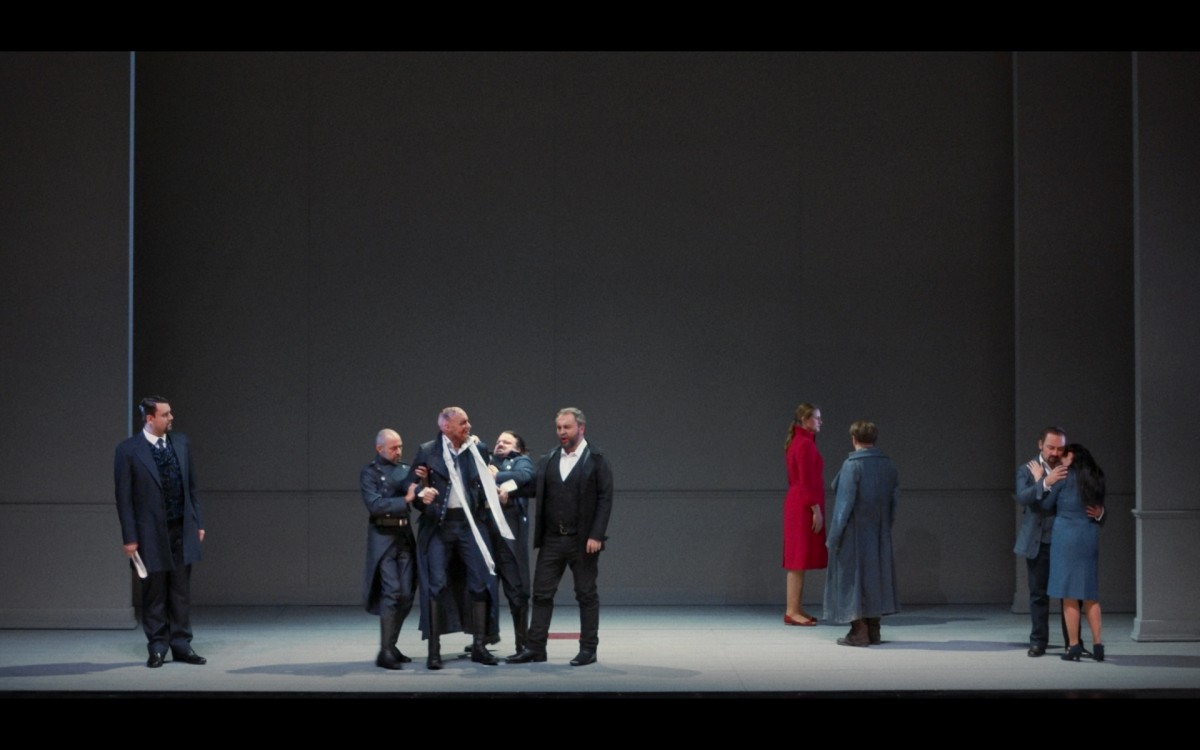
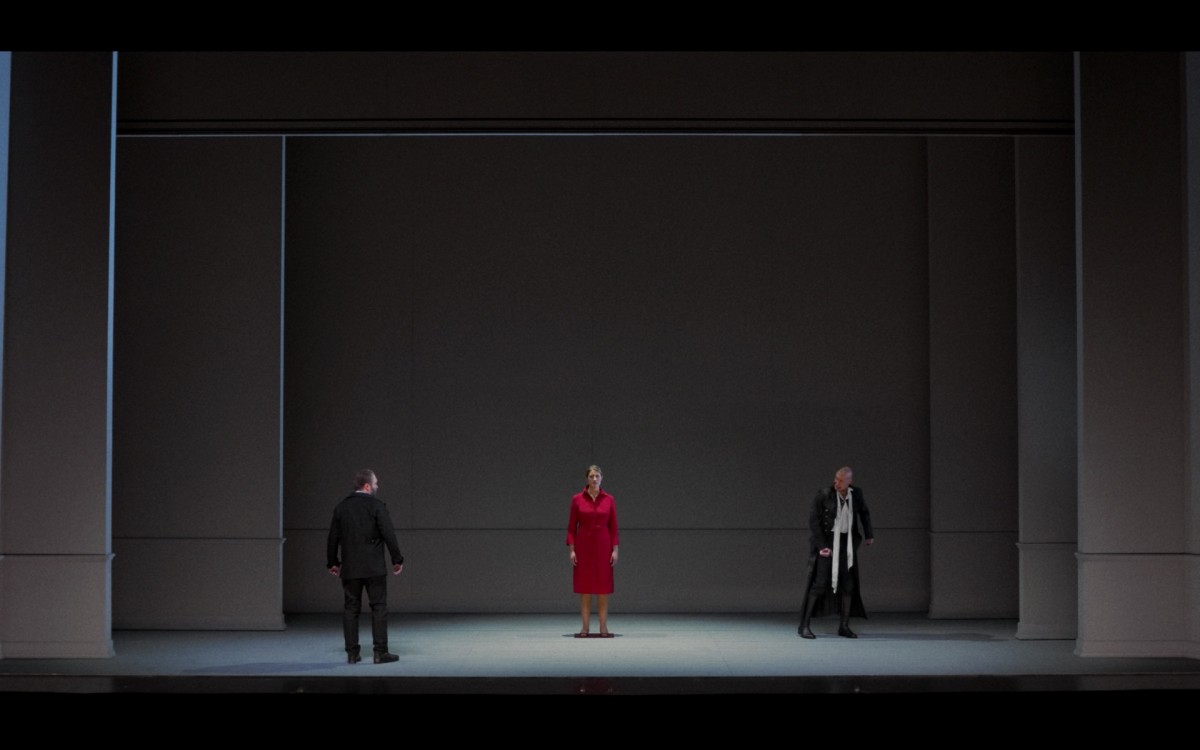
The director and filmmaker Jan Schmidt-Garre staged Fidelio in St. Gallen and also filmed it himself. He updates the praise of spousal love, but does not question it. He believes in the piece. And he shows it. Simple, direct, powerful. Only he avoids the dangerous naturalism of the original. Leonore/Fidelio is always present. Additional shots circle around her again and again – in a red dress, not disguised as a man, a principle, not a character, nevertheless compassionate, in action. Partly removed to a pedestal, then again in the middle of the events. And at the end strangely withdrawn, when joining in the general jubilation. The scenery by Nikolaus Webern is made of movable panels, gray, flexible. Only in the sunlight and at the end there is a green tree of hope. The characters remain pleasantly to themselves. Thus the piece unfolds its effect again, modernized, minimalized and yet simply left in its time frame.
Releases
On DVD with Euroarts including many bonus features:
Texts
 Ernst Bloch: Utopian Present in “Fidelio”
- The Code of Opera
- Either a Bend or a Line – Interview about Staging Operas
- Peter Gülke: Omnipotence and Impotence in "Fidelio"
- The Spirit of Utopia – Interview on "Fidelio"
Ernst Bloch: Utopian Present in “Fidelio”
There is one work in which the note simultaneously loads and aims in a quite exceptional fashion. This is Fidelio, where it is a matter of making one call audible and every bar is tensed towards this. In the light and superficial prelude between Marzelline and Jaquino there is already a disquiet and a pounding that is more than superficial. Everything is future-oriented, “then shall we rest from troubles”, and every note is symbolic. “Think you I cannot read your heart?” Rocco asks Leonore; and then the scene contracts as four voices build up pure inwardness. “I feel so wondrous strange, my heart is stifling me”, begins the quartet, the Andante sostenuto of a song giving vent to absolutely nothing but its “wondrous”, borne upon darkness alone. Marzelline sings it for Leonore, and hope illumines the goal, though the danger is great. “Now I see a shining rainbow resting on the gloomy clouds” – Leonore herself is speaking within this light in the truest aria of hope, rising and falling above sombre agitations of sound, her face turned to that star which comforts the weary. The star’s influence was already felt in the timid “wondrous” with which the quartet began. It influences Leonore’s aria and the Prisoners’ Chorus, when not only Leonore and Florestan but all condemned men on this Earth look up to the light of the morrow. But the star is dazzling and high in Florestan’s feverish ecstasy, being Leonore herself. To this star belongs the visionary cry, “to freedom, to freedom, into the kingdom above”, soaring with superhuman cadences, then collapsing unconscious and dying away.
Then comes the start of the subterranean monodrama, the scene of the wildest suspense; Florestan confronts Pizarro, “a murderer, murderer stands before me”, Leonore shields Florestan with her body, revealing her identity; renewed onslaught of the murder theme, the pistol is pointed at Pizarro, “one more sound, and you are dead”. Were the spirit and dramatic scope of this music to give rise to nothing further, then the pistol shot would be both the symbol and the act of rescue, and its tonic the answer to what was called and the call itself from the outset. But on the basis of the music’s imperatively apocalyptic spirit and scope, this tonic obtains a symbol from the requiem: more specifically, from the Easter mystery in the Dies irae. We refer to the trumpet signal. If one understands this signal in a superficial sense, from Pizarro’s earlier order to sound it from the battlements as a means of warning him, then it is merely a literal herald of the Minister’s arrival from Seville. But in Beethoven’s mind, it is the tuba mirum spargens sonum announcing the Saviour’s arrival. That is how it penetrates to the dungeon below, to the torches and lights which accompany the governor upwards. Thus does it penetrate the “namen-, namenlose Freude”, the ineffable joy where Beethoven’s music no longer holds back, and the chorus of “Hail to the day, hailed be the hour!” in the transformed courtyard of the fortress.
It was an inspired idea of Mahler’s to play between the dungeon scene and the final liberation the third Leonore overture, that overture which is really a utopian memory, a legend of fulfilled hope, with the trumpet signal at its centre. The signal is sounded, without and after the staging, and the music answers with a melody of calm which cannot be played sufficiently slowly. Then the signal is sounded a second time, and the same melody answers, mysteriously modulated, in a remote key out of a world already changed. And now back into the scene of liberation, the Marseillaise over the fallen Bastille. The present moment has come, the star of fulfilled hope in the here and now. Leonore removes Florestan’s chains: “O God, what a moment this is” – and at these words, which Beethoven has raised to metaphysical heights, there arises a song, a veritable tarrying moreover, which would deserve to go on arriving for ever. First the sudden switch to a distant key, then an oboe melody expressing fulfilment; the Sostenuto assai of time standing still and absorbed in the moment. Every future storming of the Bastille is implicitly expressed in Fidelio, and an incipient substance of human identity fills up the space in the Sostenuto assai. The Presto of the final chords just adds the reflected glory, the rejoicing around Leonore-Maria militans.
Beethoven’s music is chiliastic, and the form of the ‘rescue opera’, which was not uncommon at the time, only furnished the superficial material for this music’s moral contents. Does not the character of Pizarro bear all the features of a Pharaoh, of Herod, Gessler, the demon of winter and indeed that same gnostic Satan who put Man into the dungeon of the world and keeps him prisoner there? Here and nowhere else, on the other hand, music becomes a rosy dawn, militant-religious, the dawning of a new day so audible that it seems more than simply a hope. It shines forth as the pure work of Man, as one which had not yet appeared in the world surrounding Beethoven, a world that existed irrespective of men. Thus music as a whole stands at the farther limits of humanity, but at those limits where humanity, with new language and haloed by the call to achieved intensity, to the attained world of ‘we’, is first taking shape. And this ordering in our musical expression means a house, indeed a crystal, but one derived from our future freedom; a star, but one that will be a new Earth.
From “The Principle of Hope”, Cambridge University Press 1985
(Ernst Bloch’s reflections, which he first published in 1927 in a program note for the Kroll Opera in Berlin, were formative for Jan Schmidt-Garre’s production of "Fidelio".)
The Code of Opera
by Jan Schmidt-Garre, first published in Frankfurter Allgemeine Sonntagszeitung, 23.10.2022
(Zur deutschen Fassung herunterscrollen)
When listening to conversations during the intervals of an opera premiere – as was recently the case with the new Ring des Nibelungen at the Berlin State Opera – or when reading the first critics’ reviews, opera seems to be about many things, but hardly ever about what should actually be its goal: Musical theatre. The conversations revolve around the stage design, around the setting in which the director places the piece – his interpretation – around the singers’ voices, around the conductor. What happens in the stage designs and the setting, and how it relates to the music, doesn’t seem to play a major role, even though it is what has been rehearsed for weeks and what determines the musical-theatrical quality of a performance.
Wagner himself hardly ever commented on opera direction, which is astonishing, since almost no artist before or after him was so concerned with being properly understood and performed. He published countless programmatic writings, explained himself in » messages to his friends «, letters, and notes of conversations. (Incidentally, he also bequeathed this urge to explain oneself to his characters in the » Ring, « especially Wotan and Alberich with their monologues). Even though Wagner did not publish anything on directing, his music-philosophical reflections do provide hints that are still inspiring today.
For him, all music asks the question of its aesthetic raison d’être, of » that fateful Why? «, as he wrote. He regarded absolute music, which believes to be able to answer the Why? by itself, as an unsaturated intermediate episode of music history, between the instrumental music of the Baroque, born out of dance, and, as the historical climax and endpoint, the – his – music drama. In instrumental music, dance provided the rationale for the music; in music drama, it is the action on stage.
Thus, for Wagner, there is a compelling relationship between action and music. And not just one of synchronicity (» stupidly doubling « is what director Harry Kupfer called that), but one of cause and effect. The scenic action initiates the music. This is what legitimizes the composer to compose, the orchestra to make music and the singer to sing.
Translated into the practice of the rehearsal stage, this means that the director has to eavesdrop on the music’s inherent scenic profile and translate it into looks, gestures and gaits, lighting cues and stage transformations, into a happening that now in turn brings forth this music from within itself. The singer must evoke the musical reaction with his action, he must precede the music, so that ideally the entire score seems to emerge from the staging in the now. (By how much must he be earlier than the music? Well, that’s a matter of intuition. Perhaps by as much as a good opera conductor, say Antonio Pappano, gives his singer her cue).
According to this reasoning, when Brünnhilde awakens in the new Ring at the beginning of Götterdämmerung, it is not she who must react to the first chord of the orchestra, but it is her movement that must evoke the chord. For the singer, of course, this is much more difficult, because now she no longer waits for her musical Go!, she has to create everything anew, which continues throughout the performance, she has to compose and conduct the opera. If, on the other hand, she only reacts, the very frequent impression arises that the action is telling us something we already know anyway, and that a concert performance would be preferable instead.
Berlin is in what is probably a unique situation – which is also criticized with good arguments – that two of the best opera directors have brought the Ring to the stage almost simultaneously: Stefan Herheim last year at the Deutsche Oper and Dmitri Tcherniakov now at the Staatsoper. Apart from all the outward differences in the approaches and styles of the two (exactly the same age) directors, the productions are diametrically different in their treatment of the music. Herheim stages every musical turn, Tcherniakov almost none.
At the end of the prologue of Götterdämmerung the music darkens. The mediocre world of the Gibichungs is announced, the near death of Siegfried, the downfall of the gods. All this takes place in a few bars. The cheerful music of the Rhine and of Siegfried’s love for Brünnhilde suddenly seems moldy. In Herheim’s production, Alberich and his son Hagen cover the concert grand piano dominating the stage with a white sheet during this music and, just before the decisive change in harmony, face each other. (For nerds: the surprising E minor in the twelfth-to-last measure of the prelude.) Alberich seems to swear his son to Siegfried’s murder. Anticipated in this way, the music unleashes its power, sending chills down the viewer’s spine. In Tcherniakov’s production, this moment goes unstaged within an imposing scenic transformation, and this is how he treats almost all musical impulses. He refuses the scenic motivation of the music, which now, according to Wagner, asks the question of its why? It detaches itself from the dramatic action and regresses to an atmospheric soundtrack.
How can it be that one of the best opera directors of our time, who has staged a moving Eugene Onegin in Moscow and Paris, a fascinating Boris Godunov in Berlin, the exciting Der Fliegende Holländer in Bayreuth last year – that this director renounces the strongest tool of his art? Is the merging of scene and music as much a thing of the past for him as gold, magic helmet, sword and magic fire, which have no place in his » Ring «? If the music is not scenically motivated, however, this is not a reinterpretation of the piece – legitimate and necessary at all times – but a reinterpretation of the genre of opera. To its advantage?
The many boos against Tcherniakov may have come largely from conservative spectators who reject his de-mythologization of the Ring. (Whether they wish, as is always assumed, for a Siegfried in a bearskin à la 1876 or 1930 is doubtful. It is probably more a theatrical language of the 70s/80s that they long for, the language of Patrice Chéreau or Harry Kupfer, perhaps even Robert Wilson). Some boos, however, may be aimed at the de-musicalization of this Ring. And the majority of the audience probably cannot even name the reason for their discomfort, but registers a certain unaffectedness after the four opera evenings—apart from their enthusiasm for the singers and the conductor Christian Thielemann.
And this may be precisely because Tcherniakov does not use the code of opera, despite the many intelligent scenes developed with splendid humour, such as the Ride of the Valkyries in the seminar room, the Norns as grannies telling each other old stories over coffee, or the very moving Funeral March, in which the entire personnel of the opera bid farewell to Siegfried.
When what happens on stage brings forth the music from within itself, then the most improbable fusion of the disparate elements of space, light, action and music succeeds. Then the » impossible artwork « of opera (Oskar Bie) can happen. Prima la musica? No: Prima le parole, which also contains the space, the light, and the acting of the singers, in the service of the musica, and all this in the service of the theatre. When that happens – and only then, alas – can opera be the greatest art form of all.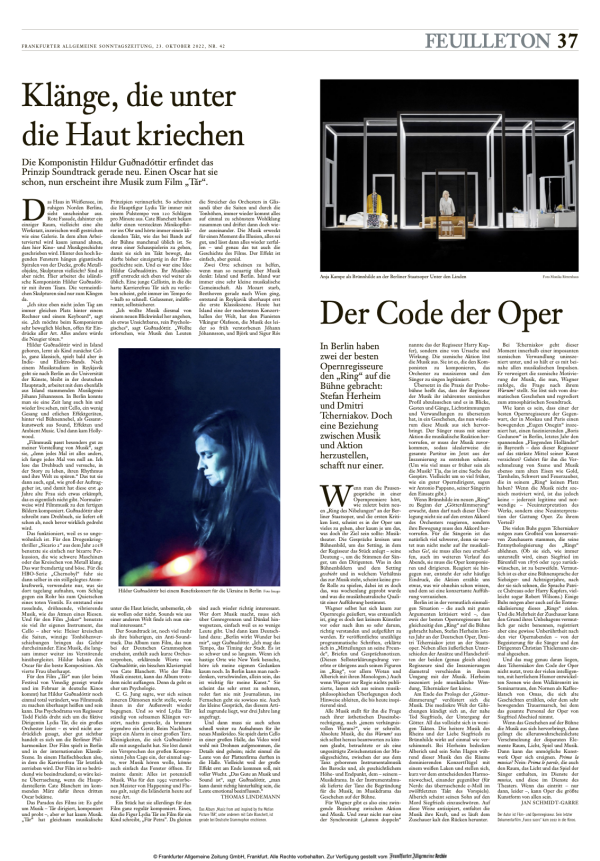
Der Code der Oper
von Jan Schmidt-Garre, zuerst erschienen in der Frankfurter Allgemeinen Sonntagszeitung, 23.10.2022
Wenn man die Pausengespräche in einer Opernpremiere hört, wie zuletzt beim neuen » Ring des Nibelungen « an der Berliner Staatsoper, und die ersten Kritiken liest, scheint es in der Oper um vieles zu gehen, aber kaum je um das, was doch ihr Ziel sein sollte: Musiktheater. Die Gespräche kreisen ums Bühnenbild, um das Setting, in dem der Regisseur das Stück anlegt – seine Deutung –, um die Stimmen der Sänger, um den Dirigenten. Was in den Bühnenbildern und dem Setting geschieht und in welchem Verhältnis das zur Musik steht, scheint keine große Rolle zu spielen, dabei ist es doch das, was wochenlang geprobt wurde und was die musiktheatralische Qualität einer Aufführung bestimmt.
Wagner selber hat sich kaum zur Opernregie geäußert, was erstaunlich ist, ging es doch fast keinem Künstler vor oder nach ihm so sehr darum, richtig verstanden und aufgeführt zu werden. Er veröffentlichte unzählige programmatische Schriften, erklärte sich in » Mitteilungen an seine Freunde «, Briefen und Gesprächsnotizen. (Diesen Selbsterklärungsdrang vererbte er übrigens auch seinen Figuren im » Ring «, vor allem Wotan und Alberich mit ihren Monologen.) Auch wenn Wagner zur Regie nichts publizierte, lassen sich aus seinen musikphilosophischen Überlegungen doch Hinweise ableiten, die bis heute inspirierend sind.
Alle Musik stellt für ihn die Frage nach ihrer ästhetischen Daseinsberechtigung, nach » jenem verhängnisvollen Warum? «, wie er schreibt. Absolute Musik, die das Warum? aus sich selbst heraus beantworten zu können glaubt, betrachtete er als eine ungesättigte Zwischenstation der Musikgeschichte, zwischen der aus dem Tanz geborenen Instrumentalmusik des Barock und, als geschichtlichem Höhe- und Endpunkt, dem – seinem – Musikdrama. In der Instrumentalmusik lieferte der Tanz die Begründung für die Musik, im Musikdrama das Geschehen auf der Bühne.
Für Wagner gibt es also eine zwingende Beziehung zwischen Aktion und Musik. Und zwar nicht nur eine der Synchronität (» dumm doppeln « nannte das der Regisseur Harry Kupfer), sondern eine von Ursache und Wirkung. Die szenische Aktion löst die Musik aus. Sie ist es, die den Komponisten zu komponieren, das Orchester zu musizieren und den Sänger zu singen legitimiert.
Übersetzt in die Praxis der Probebühne heißt das, dass der Regisseur der Musik ihr inhärentes szenisches Profil abzulauschen und es in Blicke, Gesten und Gänge, Lichtstimmungen und Verwandlungen zu übersetzen hat, in ein Geschehen, das nun wiederum diese Musik aus sich hervorbringt. Der Sänger muss mit seiner Aktion die musikalische Reaktion hervorrufen, er muss der Musik zuvorkommen, so dass idealerweise die gesamte Partitur im Jetzt aus der Inszenierung zu entstehen scheint. (Um wieviel muss er früher sein als die Musik? Tja, das ist eine Sache des Gespürs. Vielleicht um soviel früher, wie ein guter Operndirigent, sagen wir Antonio Pappano, seiner Sängerin den Einsatz gibt.)
Wenn Brünnhilde im neuen » Ring « zu Beginn der » Götterdämmerung « erwacht, dann darf nach dieser Überlegung nicht sie auf den ersten Akkord des Orchesters reagieren, sondern ihre Bewegung muss den Akkord hervorrufen. Für die Sängerin ist das natürlich viel schwerer, denn sie wartet nun nicht mehr auf ihr musikalisches Go!, sie muss alles neu erschaffen, auch im weiteren Verlauf des Abends, sie muss die Oper komponieren und dirigieren. Reagiert sie hingegen nur, entsteht der sehr häufige Eindruck, die Aktion erzähle uns etwas, was wir ohnehin schon wissen, und dem sei eine konzertante Aufführung vorzuziehen.
Berlin ist in der vermutlich einmaligen Situation – die auch mit guten Argumenten kritisiert wird –, dass zwei der besten Opernregisseure fast gleichzeitig den » Ring « auf die Bühne gebracht haben, Stefan Herheim letztes Jahr an der Deutschen Oper, Dmitri Tcherniakov jetzt an der Staatsoper. Neben allen äußerlichen Unterschieden der Ansätze und Handschriften der beiden (genau gleich alten) Regisseure sind die Inszenierungen diametral verschieden in ihrem Umgang mit der Musik. Herheim inszeniert jede musikalische Wendung, Tcherniakov fast keine.
Am Ende des Prologs der » Götterdämmerung « verdüstert sich die Musik. Die mediokre Welt der Gibichungen kündigt sich an, der nahe Tod Siegfrieds, der Untergang der Götter. All das vollzieht sich in wenigen Takten. Die heitere Musik des Rheins und der Liebe Siegfrieds zu Brünnhilde wirkt auf einmal wie verschimmelt. Bei Herheim bedecken Alberich und sein Sohn Hagen während dieser Musik den die Räume dominierenden Konzertflügel mit einem weißen Laken und stellen sich, kurz vor dem entscheidenden Harmoniewechsel, einander gegenüber. (Für Nerds: das überraschende e-Moll im zwölftletzten Takt des Vorspiels.) Alberich scheint seinen Sohn auf den Mord Siegfrieds einzuschwören. Auf diese Weise antizipiert, entfaltet die Musik ihre Kraft, und es läuft dem Zuschauer kalt den Rücken herunter. Bei Tcherniakov geht dieser Moment innerhalb einer imposanten szenischen Verwandlung uninszeniert unter, und so hält er es mit beinahe allen musikalischen Impulsen. Er verweigert die szenische Motivierung der Musik, die nun, Wagner zufolge, die Frage nach ihrem Warum? stellt. Sie löst sich vom dramatischen Geschehen und regrediert zum atmosphärischen Soundtrack.
Wie kann es sein, dass einer der besten Opernregisseure der Gegenwart, der in Moskau und Paris einen bewegenden » Eugen Onegin « inszeniert hat, einen faszinierenden » Boris Godunow « in Berlin, letztes Jahr den spannenden » Fliegenden Holländer « in Bayreuth – dass dieser Regisseur auf das stärkste Mittel seiner Kunst verzichtet? Gehört für ihn die Verschmelzung von Szene und Musik ebenso zum alten Eisen wie Gold, Tarnhelm, Schwert und Feuerzauber, die in seinem » Ring « keinen Platz haben? Wenn die Musik nicht szenisch motiviert wird, ist das jedoch keine – jederzeit legitime und notwendige – Neuinterpretation des Werks, sondern eine Neuinterpretation der Gattung Oper. Zu ihrem Vorteil?
Die vielen Buhs gegen Tcherniakov mögen zum Großteil von konservativen Zuschauern stammen, die seine Entmythologisierung des » Ring « ablehnen. (Ob sie sich, wie immer unterstellt wird, einen Siegfried im Bärenfell von 1876 oder 1930 zurückwünschen, ist zu bezweifeln. Vermutlich ist es eher eine Bühnensprache der 70er/80er Jahre, nach der sie sich sehnen, die Sprache Patrice Chéreaus oder Harry Kupfers, vielleicht sogar Robert Wilsons.) Einige Buhs mögen aber auch auf die Entmusikalisierung dieses » Ring « zielen. Und die Mehrheit der Zuschauer kann den Grund ihres Unbehagens vermutlich gar nicht benennen, registriert aber eine gewisse Unberührtheit nach den vier Opernabenden – von der Begeisterung für die Sänger und den Dirigenten Christian Thielemann einmal abgesehen.
Und das mag genau daran liegen, dass Tcherniakov den Code der Oper nicht nutzt, trotz der vielen intelligenten, mit herrlichem Humor entwickelten Szenen wie dem Walkürenritt im Seminarraum, den Nornen als Kaffeeklatsch von Omas, die sich alte Geschichten erzählen, oder dem sehr bewegenden Trauermarsch, bei dem das gesamte Personal der Oper von Siegfried Abschied nimmt.
Wenn das Geschehen auf der Bühne die Musik aus sich hervorbringt, dann gelingt die allerunwahrscheinlichste Verschmelzung der disparaten Elemente Raum, Licht, Spiel und Musik. Dann kann das unmögliche Kunstwerk Oper sich ereignen. Prima la musica? Nein: Prima le parole, die auch den Raum, das Licht und das Spiel der Sänger enthalten, im Dienste der musica, und diese im Dienste des Theaters. Wenn das eintritt – nur dann, leider – kann Oper die größte Kunstform von allen sein.
Either a Bend or a Line – Interview about Staging Operas
Jan Schmidt-Garre in conversation with Barbara Eckle, July 2016
I’d love to talk to you about each individual phase of staging an opera. How do you choose a piece?
The theatre offers me something and then I have to see if I can find a way into it. I listen to the music while looking at the piano score a few times – and to different recordings of the same score if possible – and then ask myself whether I’m able to form a picture of the opera, an overall picture. A tone that interests me. Up until now, I’ve always found that the story seems to contradict itself at a certain point. I come up against a barrier that ultimately helps to open up the piece for me.
Can you give me an example of when that was the case?
Take Massenet’s Manon as an example. This opera tells the story of a young woman, Manon, who falls in love at first sight with a stranger, the Chevalier Des Grieux. After starting a passionate love affair with him, she leaves him during the second of five acts. Why does she do that? She loves him, there can be no doubt about that. The music makes that abundantly clear. So as a director, my approach was to try and find an answer to that question. For me, Des Grieux isn’t real. He’s a character from baroque theatre, just like the lover who steps off the stage and into the real world in Woody Allen’s Purple Rose of Cairo. Manon falls in love with this theatrical character’s naivety, directness and melodramatic nature, but she knows that nothing good can come of their relationship. Reality will catch up with them at some point.
Did your Des Grieux also look like a theatrical character?
Des Grieux was a baroque character from the time of Prévost’s 1731 book Manon Lescaut, which was the inspiration for Massenet’s opera. My Manon, on the other hand, lived in Massenet’s Paris at the end of the 19th century. She has a small baroque theatre in her house and one day, the little figurine of Des Grieux comes to life. Manon follows him into his theatre and we join them there during the second act. The entire stage zooms in to become a baroque theatre, complete with beautiful cardboard stage flats like the ones found at Drottningholm Palace Theatre in Sweden. The entire opera takes place between these two different time periods and levels of reality.
What role does stage scenery play as far as you are concerned?
The space must be a feature of the story. It must be created by the staging; it has to live and behave like a member of the cast. That’s why Arabella started with a completely empty stage that slowly filled up as the evening progressed. It’s only five minutes before the end that the perfect space – the one that the opera characters have been craving – is revealed.
Do you see props as part of the stage scenery?
I see them more as part of the mask in the Edward Gordon Craig sense, where the mask incorporates the costume and the way a specific character walks. I love keeping props on the stage and using them for different purposes during the performance so that they become charged with ever greater meaning. Props are a wonderful way of identifying a character. They can develop a life of their own and be used within the production to make reference to earlier events.
What types of props do you use?
Flowers, letters, bottles, clothing, pistols. Marietta’s braid in Die Tote Stadt...
So do you start to work out the staging once you’ve identified what approach you’re going to adopt?
I still try to open up the dramatic aspects of the piece in advance by breaking it up into individual units of action. This is a technique that I learned from the theatre director David Esrig, and it’s been enormously helpful in terms of enabling me to cut through to the core of a piece. It’s a sort of structural synopsis that questions the motivations of the characters rather than the external plot. I’m able to do the staging only once I know why a character is doing what he is doing.
How detailed is this structural synopsis?
It consists of perhaps thirty sentences that I spend a lot of time refining and that give a dynamic account of the story. If these units of action make sense, then the content of the piece vaporises into them, leaving behind only the functions and the sense. This is my performance score. I look at it and can see the sequence of events in front of me.
So what you are aiming at is traditional storytelling?
Yes, even if that story isn’t entirely the one the authors intended. The story doesn’t matter to me as such, but it’s only through the story that I’m able to access the motivations of the characters, and through them the development and inner logic of the piece.
Can you give me an example of a unit of action?
Take the second scene of the second act of Arabella, for instance. The opera guide says, “Fiakermilli serenades Mandryka and the counts”. In my score I translate that as follows: “The counts present Fiakermilli to Mandryka in order to titillate him.” That’s not what Hofmannsthal and Strauss intended with this scene, but the result is a better play and a better story. And the music suits this reinterpretation or nuance so perfectly that perhaps this was, in fact, the writers’ hidden intention.
So do you fill out the performance score during the rehearsals?
I run through the entire opera on a stage set model. The singers have been studying their parts for months and have normally got them down perfectly. This means that I’m standing opposite a singer who has lived with the character for months already and who, naturally, has quite a sophisticated image of that character. It’s an image that is all the more stable because he uses his very body to breathe life into it. He actually sings the character. If I were to develop the staging only now, in an improvised style, I would have to deal with these characters that I have played no part at all in forming, and it would be difficult to achieve a coherent performance. Irrespective of that, I’d think it disrespectful to the singers if I were the only person to arrive to work unprepared.
But no matter how well prepared you are, you still encounter these fully-developed character profiles.
That’s why I try to meet the singers – or the protagonists at least – months beforehand so I can discuss my approach with them. I don’t go too much against the grain in terms of the pieces themselves, but in terms of prevailing assumptions about the characters, I often do. For instance, Korngold and his father, who wrote the libretto, viewed Marietta in Die Tote Stadt as a vain, coquettish woman whose only interest is money and who callously takes advantage of her admirer Paul’s love. Paul believes that Marietta is the reincarnation of his dead wife. Despite this portrayal of the character, which is really quite awkward, Korngold adds a lot of really heart-felt notes to her music. So I have attempted to legitimise Marietta’s actions. She has in fact fallen in love with this strange guy and is driven almost to despair because of how detached he is. This is the only way of giving the character depth and allowing it to develop. Unfortunately, I was unable to meet the singer who played Marietta before rehearsals started, and it took a while for her to let go of this image of the coquettish seductress.
Is the music the key criteria for you? In Manon, you also alluded to the music as the justification for how you read the opera.
The music is the most important thing. And the music is right. I can stage an opera in a way that goes against the text but not in a way that runs counter to the music.
Is that your response to the old question of ‘prima la musica’?
That response would perhaps be a little one-dimensional. The fact that the music is so important is precisely why it cannot come first in terms of time. For the singer, this phrase seems to suggest that they should wait until they get stimulus from the pit, responding to it by taking a step, making a gesture or whatever. By that point, it’s always too late, though. Doing this creates nothing more than an apparent musical illustration of the music that in fact is just a superfluous appendage. You’d be better off giving a concertante performance of the opera. Wagner developed a theory that lends itself well to answering this question. In his view, music drama became necessary in a historical sense because music, once it had been emancipated from dance, was missing its extra-musical foundation, its “Formmotiv” or “formal motive”, as he called it. He believed that music needed to be motivated by external elements – he did not believe in absolute music.
So was this his sole reason for creating those grandiose music dramas? To have a legitimate reason for composing?
Yes, exactly. The music responds to the questions posed by the text, the setting and the theatrical scene. No matter how questionable his premise might be, Wagner is right about one thing: This is the only way that musical theatre can work. The singer must use his action to provoke a reaction from the music. He must anticipate the music to – ideally – give the impression that the entire score has been created in that moment as a result of what is happening in the scene. This is naturally much more difficult for the singer, as they can’t just sit back and wait until the conductor provides them with a stimulus. They have to recreate everything. They have to compose and conduct the opera. If that is accomplished, the music and the action coalesce almost magnetically. The music can then be experienced from the inside out. For me, that’s the ultimate goal of directing an opera.
Let’s go back to the staging for a moment. Do you go through the opera scene by scene on the stage set model?
I assign roles to figurines and determine every glance, every turn and every motion. It’s a bit of a sluggish process to start with and there is a lot I have to change, but there comes a point when I understand the space and something like the language of the performance emerges. After that, everything goes very smoothly.
Do you play the music and have the figurines in the model do the motions?
Yes, and sometimes I don’t know what to do next so I do the motion myself. And that’s when the most mysterious thing in the whole of theatrical work takes place: I take position, visualise what has happened up to this point, put on the music... and then I know exactly what I have to do! Almost every time, I just know what to do. This means that I enter a second reality. I experience the setting while I’m simultaneously conscious of its fictional character. I then know what would be the right thing to do in that moment. In an inexplicable way, the artistic setting infects me and I live, during that moment, in a second reality. It’s an extremely uplifting experience.
Does that not happen during the rehearsal?
Similar moments do occur during the rehearsal. But I wouldn’t be able to come up with a lot of the things that I do when I’m able to concentrate in the peace and quiet of my own home. The pressure of rehearsal is more conducive to faster, more conventional solutions, not to interesting ones. That’s how it is with me, at least. A director like Herbert Fritsch works at his best under pressure.
Do you lay everything down at home or are there scenes that you are only able to develop during the rehearsals?
I try to lay down everything in advance. But there are always one or two scenes that push back. I put these scenes aside, sometimes until the rehearsal and sometimes to just before the première. These scenes sit heavily in my stomach for weeks, even though I know that these scenes often turn out to be the best. It’s the same with the narrative problems of a piece that we spoke about earlier, and which often prompt me to adopt a certain approach to staging.
What type of scenes push back?
The ones where there are no proscribed actions. The points where there is no “arrangement”. “He enters from the right so she must go left in order to keep the line of sight open” and the like. In Arabella there was a waltz, during which nothing happened, between two scenes in the second act. A minute of music with no action – what do you do with that? To resolve situations like this, I attempt to determine exactly how I got to this moment in the piece and where I have to go. I do this countless times. Syd Feld, the screenwriting coach, calls it “hitting your head against the typewriter”. “In the next scene, Zdenka sends a very important letter to her lover. She sends a letter, sends a letter...” And suddenly I’ve found the answer. I had Zdenka dance a little waltz with the letter in anticipation of her forthcoming night of passion. That was very touching. Beautiful moments that really stick in the mind can come from slight imperfections in the piece. That’s why Shakespeare’s plays are always staged so unusually. Whilst his plays are ingenious, Shakespeare is by no means perfect so the director always comes across these gaps that need to be filled in.
Are you always able to easily apply what you have created at home in the rehearsal?
The first phase of rehearsals is largely about communicating the staging I have prepared to the singers and to study it. I do that as quickly as possible and skip over the details to begin with. The main point is to bring the singers together in a unit. Stanislavsky said that the more closely the mental images of each participant coincide, the better the performance can be. The sooner the singers are able to get their bearings and imagine the staging on their internal map, the more confident they will feel and the sooner they will be ready to absorb the details and the deeper aspects of the staging.
Are the singers receptive to your suggestions?
The singers all have very different temperaments. Some do exactly what I say and not an iota more, so when I see the performance in front of me, my staging looks alarmingly bare. Some understand what I have said amazingly quickly and improvise the entire scene according to the sense they think I had in mind. At those moments I feel like a painter who wants to put a line here and a dot there, but instead someone fills the entire picture with paint. I then have to slowly scrape it off again to find out whether what I intended works.
And what happens if it doesn’t work? If the timing or the idea itself doesn’t work?
Then we need to work together to find something new. In these situations, the singers make suggestions or I offer something up. And if nothing comes to us at all, I do what I did at home. I enter the fictional setting and hope that it will reveal the next step. Usually it does, quite by itself and without any great deal of mysticism. Nevertheless, it’s an extremely intense existential experience. If I say to the singer, “Let me take your place”, it’s a bit like saying, “Give me your glass for a moment so I can take a sip.” I enter this second reality with just the same clarity. I taste it just as strongly as I would the wine from his glass. I become part of a current; it’s almost a religious experience, and certainly the most fulfilling one to be had in stage direction. And when the idea finally comes, it’s a discovery rather than an invention.
So how do you explain being able to find a solution when your colleagues can’t? They are just as deeply emerged in the setting as you are.
Because I’m able to see the whole picture in my head and see where the missing detail should fit into it. When I have this objective in mind, I’m able to go beyond the given. In my inner world, the second reality is more pronounced than it is with singers who have only recently been confronted with it. I sense the direction and the feeling of harmony once the detail materialises. Once it all suddenly comes together. There are always one or two people within a team who feel exactly the same way and are able to make wonderful suggestions. The others eye them suspiciously because they think they must have access to some secret knowledge that’s been withheld from them. Those people just have a clearer mental image, however. The conductor Sergiu Celibidache taught me a lot, and he called this process “transcendence”. That may sound a bit esoteric but what he meant, very simply, was being able to move beyond something. The conductor must somehow be able to go beyond the tonal phenomenona that confront him. Otherwise he would have no standard by which to judge them. That means that, somewhere within his mind, he has already reached his destination and knows how to get there. The same applies to any artistic process.
When rehearsals have finished, when everyone is that bit closer to the end goal, staging must come a little easier.
You often hear how an important scene was changed shortly before the première and you ask yourself how that was even possible, given how little time was left. The fact that this happens doesn’t mean that you were just meandering along up to this point. This is Stanislavsky’s exact thought on the matter – by the end, the mental image is so mature and sophisticated, and everyone agrees with it so completely, that the singers or the director are able to change an action in an instant or reinvent it without damaging the architecture of the production. The second reality is able to support everyone at this point.
Do you work according to Stanislavsky’s system?
I find his concept of the ‘super-objective’ really exciting. He talks about the super-objective of the play, a sort of quintessence, and the super-objective of the parts, and that is very interesting. He was an actor himself and was due to play Argan in Molière’s The Imaginary Invalid. At first he attempted to play the part by saying, “I want to be ill”. That didn’t work, however. At some point or other he came upon the formula, “I want people to see me as a sick person”, and this formula enabled him to crack it! That was Argan’s super-objective. A formula that stands above the character and helps the actor to give his actions the right direction. Tom Hanks said that he was only able to play the businessman in the film A Hologram for the King once he had found the following formula: “A man who has lost his self-confidence but who must act as if he hasn’t”. Now that’s something an actor can act! A formula like “an American in Saudi Arabia” would have given him nothing to go on. It would have been too literary.
Do you have an example from your own work?
The character of Manon. In my production, she’d had enough of cynical Paris society. She wanted to experience sincere, untempered emotion. Her super-objective is, “I want to be an innocent”. Arabella’s another one. She’d heard and read a lot about profound emotions and real love, yet she is unable to find them in herself. Her super-objective is, “I want to feel something”. This kind of formula is a huge help to a lot of singers and acts like a sort of mantra.
What methods do you use to communicate the personality of the character to the singer?
Everything only becomes concrete during the rehearsal, when the singer is required to act out a certain action with the motivation x in the context y. Before the rehearsal, I was telling the soprano Betsy Horne about the opera Arabella. Now Betsy and I talk about a fictional character who’s right in front of us and who is supposed to take on a life of its own over the course of these seven weeks. I never criticise Betsy personally. Betsy and I work together as a team to create this character – as the director, I look at the character from the outside and she as the singer, from the inside.
It’s more difficult for the singer to separate herself from the fictional character than it is for you...
Most of them are very aware of this difference. But that’s the mystery of acting. Even a three-year-old can experience a chair as a tractor whilst never forgetting that it is, in fact, a chair. The interesting thing is that actors talk about their parts in the first and third person. They say, for instance, “I’m a burned-out banker who...”, “Frank is a naïve musician who...” and so on. Their job is founded on this duality, this duality of I and He. If I go on stage to demonstrate how I would perform an embrace, for instance, then I sense this difference very keenly. I’m not embracing the singer. I’m embracing the fictional character. That’s why neither of us feel any shame while doing it either.
Hegel viewed theatre as the highest form of art, since in theatre, a fictional event is presented as if it were a real event.
That’s why acting, which is more often viewed as being on the fringes of art (if you consider it at all), is paradigmatic for a very essential aspect of art: the experience of fiction. This is also the essence of writing. It’s a spiritual experience of the subject matter, of acting out the subject matter on the stage in the mind. Anybody who writes has this experience. Novalis even said that writing is to experience language itself.
So what style of acting do you like your singers to employ?
Hitchcock gave the best stage direction: “Don’t act!” The singer should execute the action rather than act out executing the action. Very often you see that a singer doesn’t, for example, put on his glasses because he wants to read a letter. He acts it, “Oh, there’s a letter and I can’t read it. What should I do?” The next thing he acts is: “No problem – there are my glasses. I want to put them on”. And finally: “Excellent – I can see everything perfectly with my glasses. So – what does this letter say?” He is afraid that the action is too mundane like this. Too bare and unartistic, and so he serves it on a platter. This is what Hitchcock meant by “Don’t act!” There can be no difference between the performer and his action. They have to be completely identical – the character is what he does.
What do you say to the singers when this happens?
In these situations, it’s usually enough to make them aware that it’s happening. Then there is the tendency that actors have to enlarge the individual action. In Manon, a bouquet plays a key role. I asked the actor who was playing Brétigny to cast a casual glance at the bouquet as he entered the stage. He did this and I was happy. At the next rehearsal, he saw the flowers and reached out to them with his hand. I didn’t think this was as good. On the third occasion, he picked up the flowers, sniffed them and put them back. I stepped in at this point: “Please – just look at them. That’s enough!”
The same happens with theatre productions in the repertoire. The performances are becoming longer and longer...
A bigger danger, even at the rehearsal stage, is when the singers execute the action but don’t believe their action conveys what it’s about, so they add a commentary to it. In my production of Arabella, there’s a huge increase in tension during Mandryka’s first encounter with the father of the woman he has fallen in love with. He approaches the father, closer and closer, breaking all of the rules of etiquette. As the music hits its climax, he suddenly stops, acts as if nothing has happened and sits back down. Realistic lighting returns, the father gives a sigh of relief – and the audience with him. In one of the last rehearsals, the singer who was playing Mandryka suddenly made a mollifying gesture just before he sat down. All of the tension that had built up was gone. The act of sitting back down is in itself a return to normality. A gesture explaining that fact does nothing to support that. Instead, it saps the action of its strength. It brought to mind something that was really pivotal for me from an aesthetic point of view, and that was a Picasso sculpture that I saw when I was very young. It was one of these small sculptures made from folded metal that was painted. And it occurred to me just how economic Picasso had been in his work. He either bent the metal or painted a line. Never both at the same time. The same applies to theatre. Theatre is extremely compact and the chain of actions on stage must be executed with exceptional precision and linked together as economically as possible. It’s either a bend or a line, a gesture or taking a seat. In other words, sitting down is the gesture. This also demonstrates how little is achieved by comparing theatre to reality. In real life you could do both.
Where does the singers’ desire to comment on their actions come from?
At that moment the singer thinks my god, I’m not doing enough here. What I’m doing doesn’t match the intention of the scene. Yet it does: within the context! David Mamet put it as follows: “The boat has to look like a boat. The sail doesn’t have to look like a boat.” But we always think that every detail has to look like the whole. So we try to act everything at once: the action, its meaning and its context. The director is responsible for this, though. That’s how labour is divided. And that makes sense. The theatre director Rudolf Noelte always said, “Being a director means sitting in the stalls.” Only then are you able to see the whole. The director is responsible for ensuring that all of these simple actions – including all the elements, the space and the lighting – constitute the sense of the piece.
We’re now right in the middle of the rehearsal process. What key phases are still to come?
The next phase is the nice one, the one where the director is able to take a step back and take in the first, lengthier scenes in the production. In film, this would be the editing phase. Those first few weeks in theatre, when the outline of the performance starts to develop, correspond to the arduous phase of checking the material in film. Now you can see quite clearly what works and what doesn’t. Now you can refine the performance and round it out. Next come the final rehearsals. This is when all of a sudden, as if by some conspiracy, all of the differences of opinion that were there during the production phase are set aside and everyone sticks together to give a good première performance. The director moves from the stage to the auditorium and watches the performance under realistic conditions. Yet again, everything depends upon experiencing that second reality at this point. I have to submerge myself fully into what is happening on stage to assess what works, and I’m very sensitive to disturbances of any sort during that time. If a singer enters the hall during his break or the assistant director speaks to me, I’m torn out of that second reality and lose many precious minutes trying to get back into it again. Then comes the dress rehearsal. As with all of the final rehearsals, I don’t give criticism to the performers in person. I send an e-mail so that the singers can read it in peace and quiet. They’re more likely to take it in that way. And well... then, just like that, I’m free and waiting for the première, hoping that the second reality kicks in...
Is there anyone who you model yourself on artistically?
I had wonderful teachers. I think of Esrig when developing a concept, Noelte during rehearsals, and Celibidache... That isn’t the same as having a role model, though. If I had to name one person who I feel close to, it’s Ravel. In him I find analytical rigor, purism, clarity and a sensitivity to old forms, as well as elegance, ease and a hint of metropolitanism. And he understood how to bring everything together into one sensory flow, along with a sense of melancholy... I would love to work like that. To move people to tears.
Peter Gülke: Omnipotence and Impotence in "Fidelio"
Why does Don Pizarro not quickly stab his intended victim when the signal sounds? The armed lady would hardly present an obstacle. He had already calculated that there would be little time between the murder and the minister’s arrival ( “Now, old man, we must hurry...” ). He was also aware of Rocco’s knowledge of the crime; If necessary, he would do away with Leonore and Rocco too, and he would certainly be able to keep the minister, who had neglected his duty by failing to enquire about his vanished friend Florestan, away from the cistern.
But he cannot. The most common, and in no way mistaken explanation is that this is the dividing line between a realistic and a symbolic act; that the trumpet call that penetrates the depths of the dungeon is heralding the day of liberation; that Leonore represents all of mankind – summoned to self-determination – in her rebellion against the tyrant. Realistic considerations about this short window of opportunity thus seem hopelessly banal. However, the power of the penetrating symbol cannot remain the only explanation: it is not the only thing that paralyses Pizarro’s arm. No matter how precisely he may calculate the pivotal moment, he is not able to prevail – although he has not yet been robbed of his power. Pizarro’s paralysis reflects the helplessness of a dictatorship that has subjected everything to its rule, that has made everything calculable and that has perfected itself – in a paranoid security mania – to a system of rules, which now abruptly falls apart, because the tolerances have been set too tight. In the tyrant’s seamless relatedness to the tyrannized there is no tolerance at all; and if the latter is required to accommodate an unexpected malfunction, omnipotence is transformed into impotence. He who fails to strike the blow for which he has lived, who thus fails more due to himself than to Leonore, “blinded” by the sound of the trumpet as if by a dazzling light, is an example of Hannah Arendt’s distinction between power and violence: “Everything depends upon the power behind the violence”. There are parallels to those who let things run their course in Eastern Germany in the autumn of 1989, even though they could have organized a dilatory bloodbath instead. They declared the death sentence for their country “on the side, so to speak" (Schabowski*).
And like them, he refutes the antinomic conception of necessity and coincidence. How much coincidence, how much error of judgement was required, for Leonore to remain unrecognised; for her to inveigle her way into Rocco’s employment at precisely the same time that the minister made an official inspection visit; that on that same day, Rocco allowed Fidelio to talk him into taking her into the deepest, most forbidden cistern; that Schabowski appears to find a written note with the government’s orders in his jacket pocket; that the public in the GDR understood this as a signal that the border was opening up, which it wasn’t; that the overwhelmed border guards were unable to contact the authorities; that they allowed themselves to be persuaded that other borders had long since opened up. The more compulsive the tendency, the more careless it is in its choice of means. Joshua’s trumpets, the forefathers of the “Fidelio trumpet”, did not need to resound loudly to make the walls of Jericho tumble down.
* Günter Schabowski was a member of the Central Committee of the SED party in East Germany. His – possibly intentional – misunderstanding concerning the announcement of the opening of the border at the Berlin Wall contributed significantly to the eventual collapse of the GDR (editor’s note).
From: "Fluchtpunkt Musik" by Peter Gülke, Kassel, Stuttgart, Weimar 1994
The Spirit of Utopia – Interview on "Fidelio"
Jan Schmidt-Garre in conversation with Caroline Damaschke, March and June 2018
Beethoven’s sole opera has a reputation of being impossible to stage. Indeed, its dramatic range, from petit-bourgeois light opera to an oratorio-like freedom symphony, presents a big challenge to any director. What fascinates you about Fidelio?
I’ve wanted to stage Fidelio for twenty years. I love the work; even when it’s poorly staged, I am always moved to tears. I think it’s necessary to allow the work to begin in a petit-bourgeois milieu. The characters are typical of Beethoven’s time, and that society is depicted fantastically in the first scenes. It is this which establishes the dramatic level from which the subsequent heightening becomes possible. It is not only the prisoners, but also the simple folk who ultimately have a right to a better life, to revolt and liberation. It is important to begin with the modest happiness of Jaquino and Marzelline so that the grandiose vision can have the desired effect.
The thread running through Fidelio is that in every musical number, the people want more than they actually say. There’s always a kind of surplus built into the composition, there’s always this moment of transcendence, the wish for a better world – in other words the very thing that fascinated Ernst Bloch and inspired him to write “The Principle of Hope”. This utopian aspect, which is concealed in every number, is to me the most important aspect of this work.
There are three versions of this opera which Beethoven himself premiered, and also four overtures. Beethoven worked on the piece for over ten years, working with three librettists on the plot and libretto to develop a dramatic framework for this opera about revolution.
The work possesses a fantastic vitality: it always goes straight upwards. In the first version of 1805, that was not the case yet. In that incarnation, there was a text-book plot – very well balanced, with slower and more exciting sections, the way every good theatre play is constructed. But this form of drama didn’t really interest Beethoven. When he re-worked the opera, he simply deleted all the slower sections which took away the momentum of the story. The version that we are performing is the one from 1814, which was performed by Beethoven as the “final” version. In the second version of 1806 he had deleted the “gold” aria and did not reinstate it in the 1814 version. However, the bass Carl Weinmüller protested, understandably, and Beethoven again included the aria after the seventh performance. Since then, the aria has always been considered a part of this version, even though it doesn’t actually belong in it. That was an interesting discovery during my research, because it was the only element that struck me as not really belonging to the work.
Beethoven’s fame primarily rests on his symphonic works. It’s said that he had no real sense of theatrical drama ...
I can’t really agree with that. In terms of musical theatre, Fidelio shows that Beethoven can hold his ground with Mozart. For instance, there is a moment during the trio in the first act in which Leonore suffers a breakdown or a depressive episode – she recoils from the immense task to which she has committed herself. Marzelline, who is in love with Leonore, tries to encourage her. Musically, it shifts back and forth between B-flat major and B-flat minor, though actually only one semitone is different: Marzelline always sings a D and Leonore sings D-flat. It is brilliantly composed.
As a director, how do you deal with discoveries like that?
To me, this dimension of the work is more important than the story and its interpretation. I always stage the music. Even to the extent that in the course of rehearsals, the text tends to fade more and more into the background. My main concern is to develop a choreography that exactly corresponds to the architecture of the music, and at the same time to provide the psychological motive for every step, every glance. Both are essential. Pure psychology without any relation to the musical construction leads to an inappropriate realism that has no place in opera. In contrast, a musical choreography alone would simply be a kind of formal game – art for art’s sake. If I’m lucky – and the composer helps me, such as in this brilliant trio – it is the form, not the text, that reveals to me what the character is feeling at a given moment.
The work is inspired by an event that took place during the French Revolution and describes the liberation from the tyrannical rule of a despot. Beethoven himself was an enthusiastic supporter of the Revolution. However, in order to circumvent the censors, the opera’s story was set in 17th-century Spain. In your view, how strong is the link between this work and the French Revolution?
I think of the work as being rooted in Beethoven’s time, and that’s the starting the point. The prison staff, Rocco, Don Pizarro, Marzelline and Jaquino are characters from this time – that is, the beginning of the 19th century. But Leonore stands out. To me she is a character who transcends all boundaries, an extraordinary female figure with visionary power and charisma. The only comparison that springs to mind is Jean of Arc. But where does such a person come from? To me she seems to come from a different world, a different time. Where exactly we don’t know. She enters this world to liberate her husband, who also comes from that other world.
How do you make it clear that Leonore does not come from Rocco’s and Marzelline’s world?
Leonore wears a modern dress in our production; she is not disguised as a man. Her character comes across through her aura, her charisma, and her extraordinary personality. The people she meets are so fascinated by her that she is able to convince them that she wants to work as a turnkey in the prison – and in fact she could tell them anything, because they have never met anyone like her. Everyone translates this fascination into his own language: To Rocco she seems like the perfect son-in-law and employee, and Marzelline wants to marry her.
Leonore seems very different, very alien, at first, but in the course of the piece the other characters become like her – with the aid of very simple means: They wear several layers of clothes and in the moment of utopian exuberance in the musical numbers they remove them layer by layer. These items of clothing left lying around are a provocation to the despot Pizarro, because they herald the revolution. In the final scene, everyone – except Pizarro – has arrived in the era, or more precisely, the philosophical point, from which Leonore comes, and all look the same, style-wise. In that way we integrate the finale, which is essentially just one big chorus tableau, into the plot. I think that Beethoven composed this finale as an oratorio, because this utopian idea is impossible to portray on a stage. The music needs to have the last word in this case. In music, utopia can take place. In the arts it’s possible to create something which does not exist in everyday life: perfection. True perfection in an imperfect world – that’s fantastic!
What comes after that?
As soon as you leave the musical level and return to studying the people, you realize that they are not perfect. Leonore bears the scars of her exhausting ordeal and the journey she has made, and Florestan is scarred by his experiences in prison. He is no longer the same man to Leonore: she is disappointed when she can no longer see the charismatic sparkle in his eyes that she had always loved, but which was extinguished in prison. Paradoxically, mankind finds redemption, but the people have been sacrificed along the way. Yet their sacrifice was not in vain. During a lighting rehearsal I recently said, “Don’t make it so gloomy! It’s a happy end, after all. It’s sad, but happy!”
Three months have passed: Your production has now become a film. Has the performance changed in any way as a result?
First of all, I’m very glad that the work on the filming and editing helped me avoid falling into a kind of hole, as usually happens when you finish a very intense production. I was able to spend another three months working on the wonderful Fidelio!
I’m sure that the performance has changed, at least as a result of the transfer to a different medium. On the stage I always try to direct the attention of the audience so that, ideally, they are always looking in the direction that I want them to – free and unfree at the same time. In the film I’m forced to substitute this artistic means of directing the viewer’s attention for the technical means of editing. Therefore, the danger arises that subtle references have a cruder effect because they are forced upon you. On the other hand I’m able to shift the focus differently than on the stage. In the finale, for example, the camera stays on Leonore, so that the events around her seem to fade away as if in a dream. You can only do that in film.
The film seems more like a studio production. We don’t see an audience, there is no applause...
I initially wanted to emphasize the live character of the performance, which has a special quality all of its own. And I did in fact primarily use the material from the opening night. But as a viewer of the film, when you really find yourself immersed in a passage such as Leonore’s aria, the applause can actually pull you out of experiencing this fictional world. I wanted to avoid that. Moreover, we finished the lighting rehearsals one day earlier than planned. I was able to use the extra day with the lighting and film crews to film certain shots with the singers that would not have been possible during a performance or a dress rehearsal because you need to have the camera on stage. So during the editing I had close-ups of Leonore, details like hands and feet, or a subjective view of the auditorium which you don’t usually see. This gave the whole performance a more cinematic feel and elevated it somewhat from being simply a recording of a theatrical performance.
